From Strahan to Waratah

So we left Strahan and headed back into the wilderness. On winding roads, but not as bad as the road to Queenstown. The turn-off to Rosebery golf course was 7 km before town and easy to miss. A small sign and then a steep loop into a wooded hilltop, there it was: one of the steepest golf courses in the world and incredibly scenic. Only a few caravans were there and we managed to get a spot with a view.
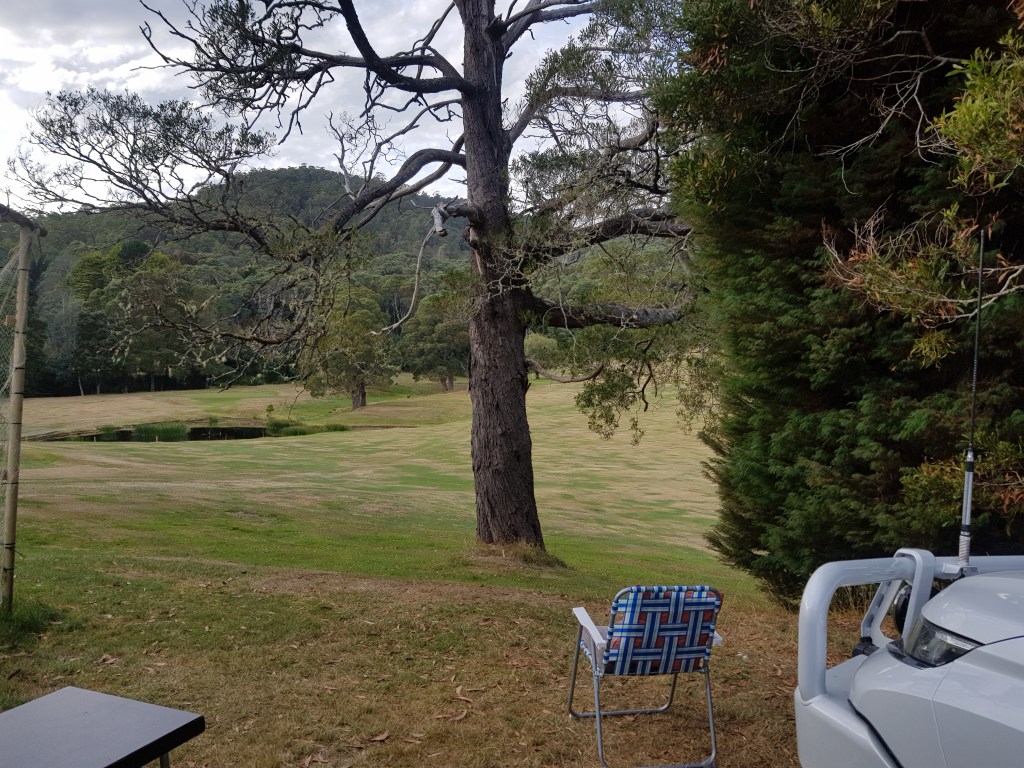
Beautiful nature, beautiful weather, friendly fellow campers. Ten dollars a night per honesty box. When we drove to town for shopping, we discovered that, contrary to its bucolic name, Rosebery was a large active mine – 4 km wide and 1.5 km deep, 500 employees, a greenish lake with effluent, excavated hills, most of the activities underground.

We stayed another day and visited Montezuma Falls – a solid 3-hour return hike along an old mining tramway that had been abandoned about a 100 years ago. It brought back memories of hiking in Europe, where many tracks follow old trading routes or Roman roads. The river valley to the falls used to be bare from mining but had been reclaimed by the rainforest.

Then rain… and our wettest departure/set down any where on our journey. We packed up in pouring rain wading through large puddles, collecting wet items in plastic bags, and moved on to remote and tiny Waratah with a caravan park with all amenities: power, water, and laundry. You paid the post office lady – and she reduced the price by half because hot water was only sometimes available. Power connections were known to be dodgy as well but for us everything worked out just fine.

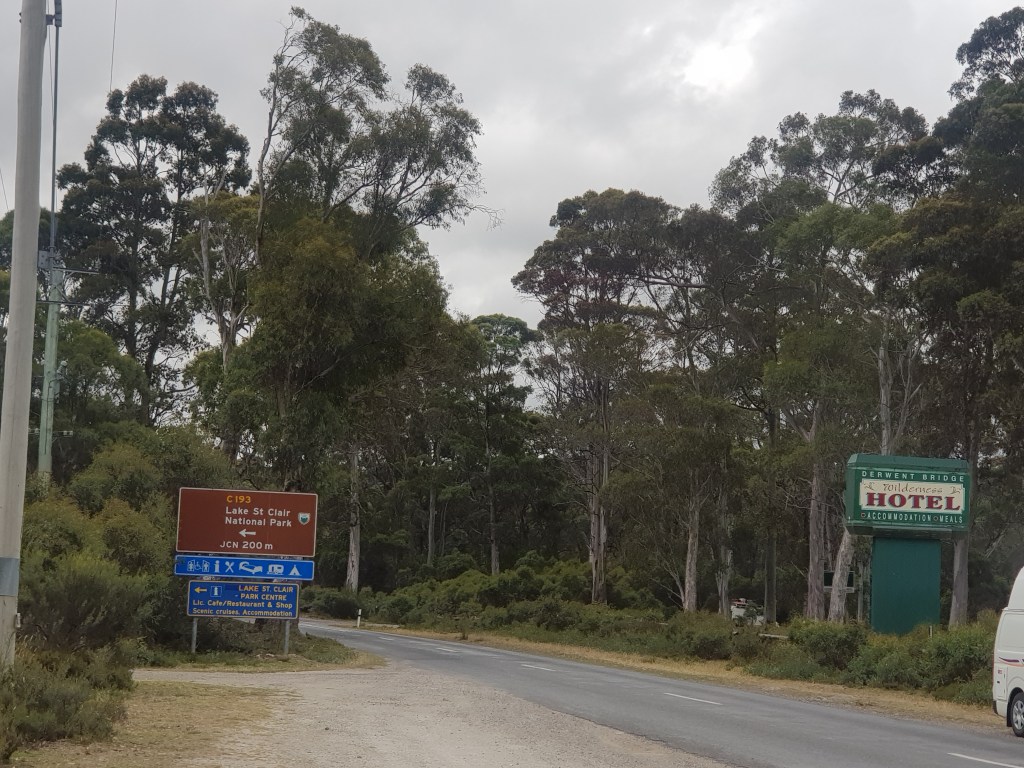
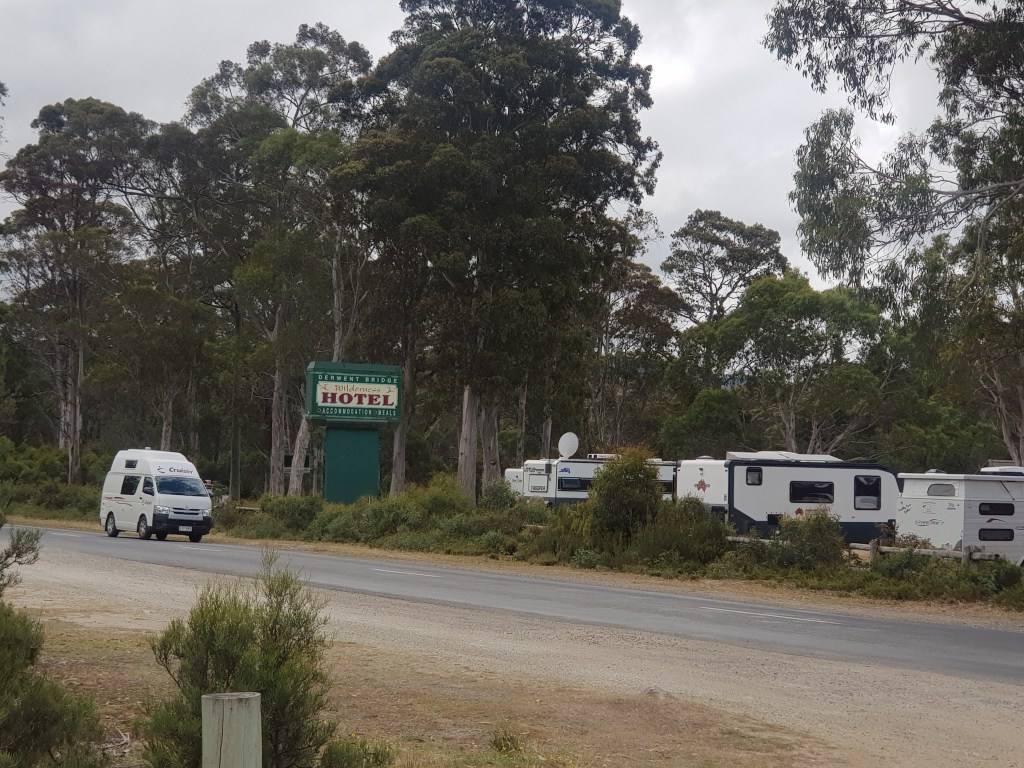
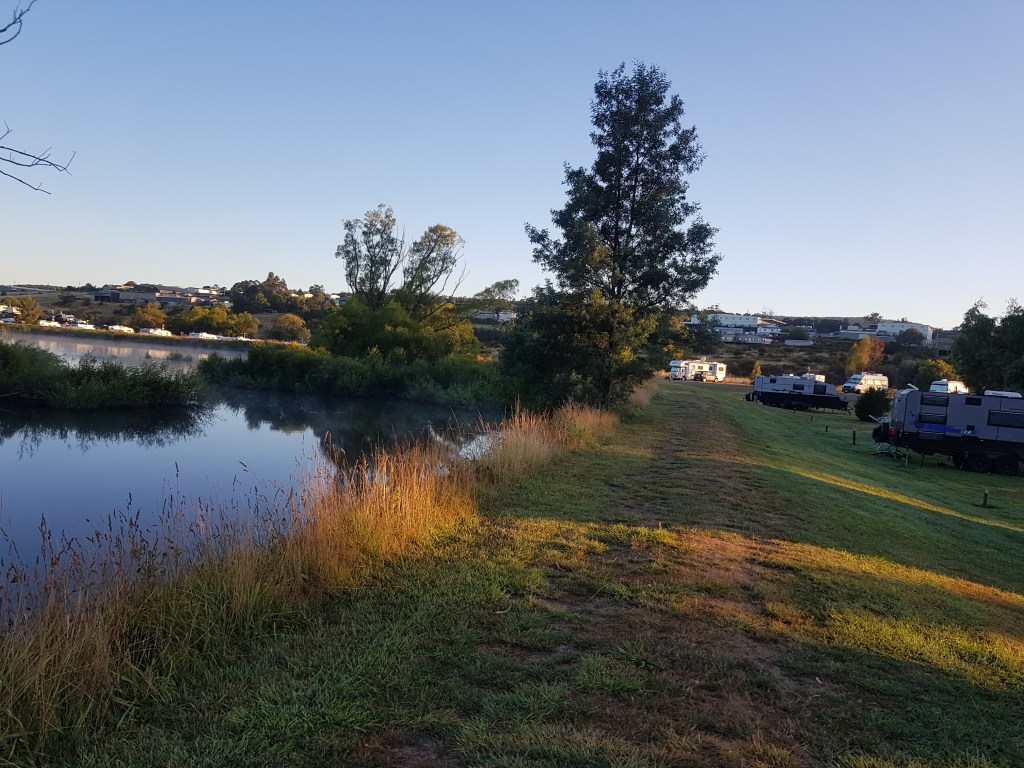
See the caravan park on the other side of the lake? And that’s the sign:

We had grey-nomad heaven for a couple of days with fantastic weather and the friendliest bunch of other campers. It was like living in a small village where everybody talked to everybody, laughed with each other, shared stories… and then those people left. And the weather turned cold and rainy. Travelling in a caravan is a master class in accepting change.
Queenstown and Strahan

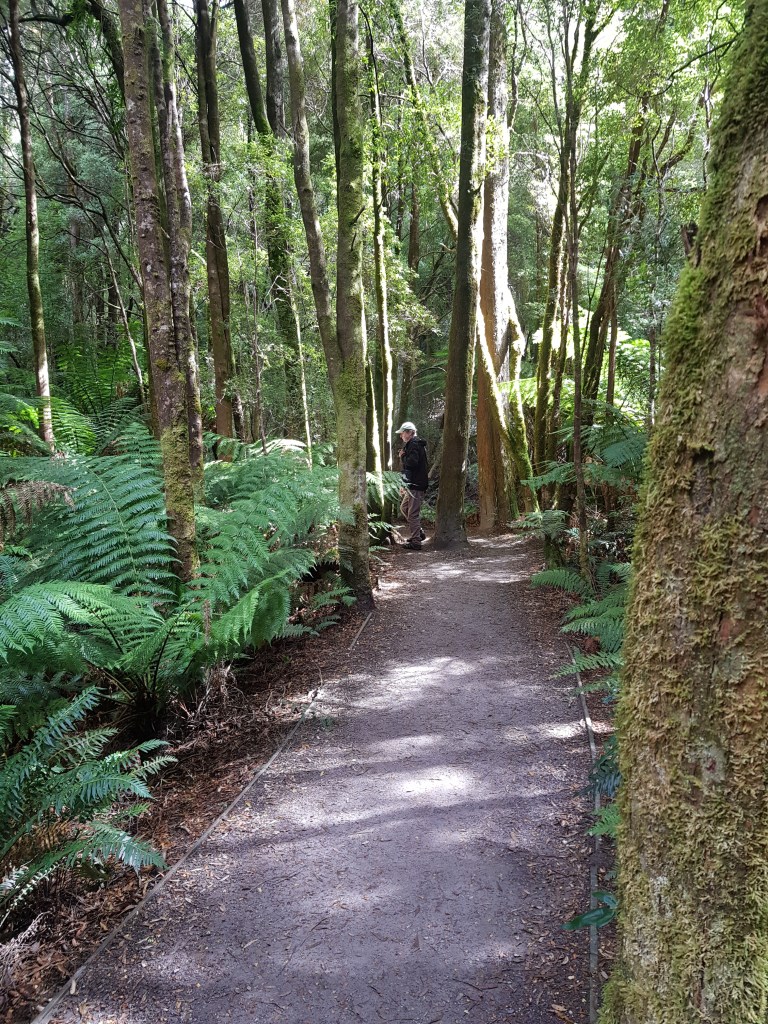
The Tasmanian west coast is different. The rainforest is almost like a jungle, densely packed with trees and shrubs. It is wetter, wilder. Often tree trunks are covered in moss or tree ferns.

The road from Derwent Bridge to Queenstown had the tightest and scariest serpentines we encountered on the island. And the contrast between the national parks and what lies beyond was dramatic. Driving into Queenstown was like driving into an open-cut mine. The hills and mountains around it were scarred: dug up, dug into, pierced through, many without vegetation. The town itself was indescribable. A mix of shacks, sixties townhouses, and grand buildings from the Goldrush era.

We stayed overnight in the RV parking area of the Queenstown oval (RV = recreational vehicle). The oval is infamous for its gravel surface and attracted quite a lot of sightseers while we were there. (Aussie football or AFL is usually played on thick grass but pollution from mining made it hard to grow it.) It was an eerie place to stay but we were surrounded by a bunch of very friendly campers. Wonderful.

Onto Strahan, the picturesque harbour village. Let’s start with a romantic picture of it:
The reality, however, was quite different. Two big cruise terminals dominate the foreshore. The world-famous Gordon River cruise booked out for weeks despite steep prices. International tourism. Five-star holiday homes. Hectic visitors.
We stayed at the initially pleasant Strahan golf club where you can park your RV for a small fee (honesty box). When we pulled in around lunchtime, we thought it was rather full. Yet more and more caravans and motorhomes appeared and crammed into any remaining nook and corner. Chatting with the people next to us (all from WA), we realised that a lot of campers travel anti-clockwise around Tasmania, from the ferry in Devonport down the west coast, across the highlands to Hobart and the east coast. We were headed in the opposite direction.

On the second day a particularly loud group crowded in close to us – and we were ready to leave. But where to go? To Zeehan, another mining town? Existence send us tip via another traveller from WA: Go to Rosebery golf course. You will be pleasantly surprised.

Into the Western Wilderness

With only weeks left before returning to the mainland, it was time for the last leg of our Tasmanian journey: go West. We stayed for three days at the remote, pleasant, and half empty Wayatinah caravan park. Then we moved on to free camping next to the Derwent Bridge Wilderness Hotel close to the southern end of the Overland track at Lake St Clair.

Seen from the outside you wouldn’t guess the inside of the hotel. It looks like a Swiss ski resort, with a high ceiling and a huge fireplace. Usually packed with hungry nomads and thirsty trekkers. A bartender complained to us that “it never stops”.

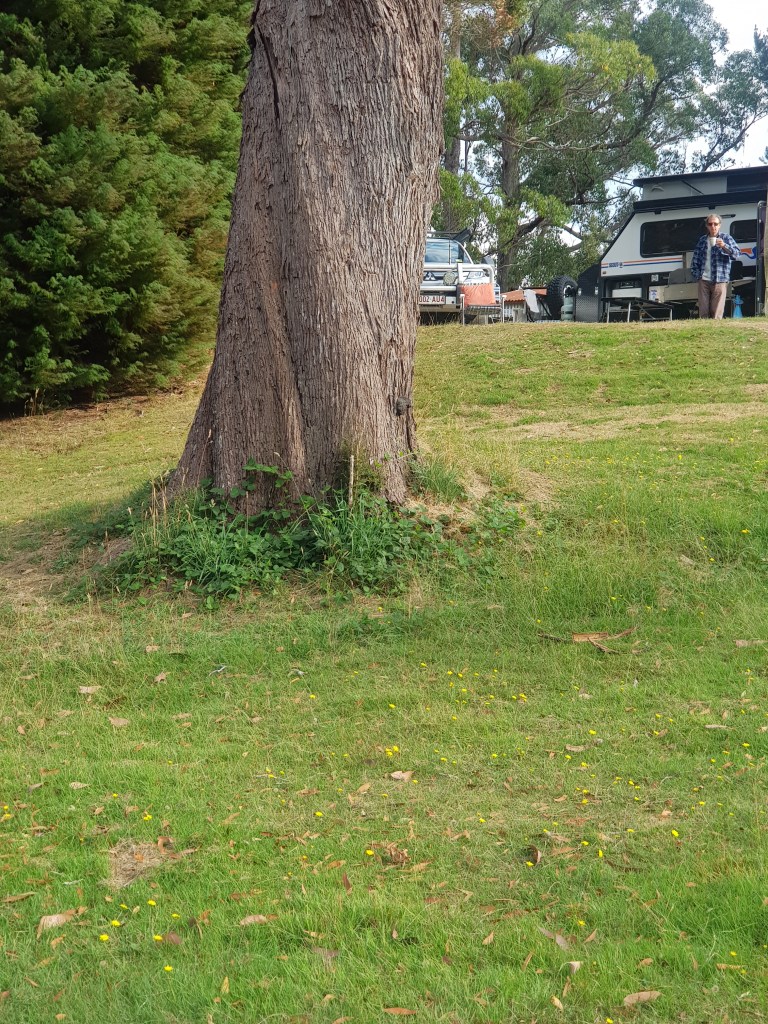
Rainy, cold, overcast – Lake St Clair was shrouded in mists with occasional beams of sunlight. And there we saw our second tiger snake, sunning itself curled up on the side of a path just a few steps from a sign alerting hikers not to approach snakes. No, I didn’t take a photo of it. Instead, I took a picture of this gorgeous alpine gum tree.

Tiny houses in Cygnet

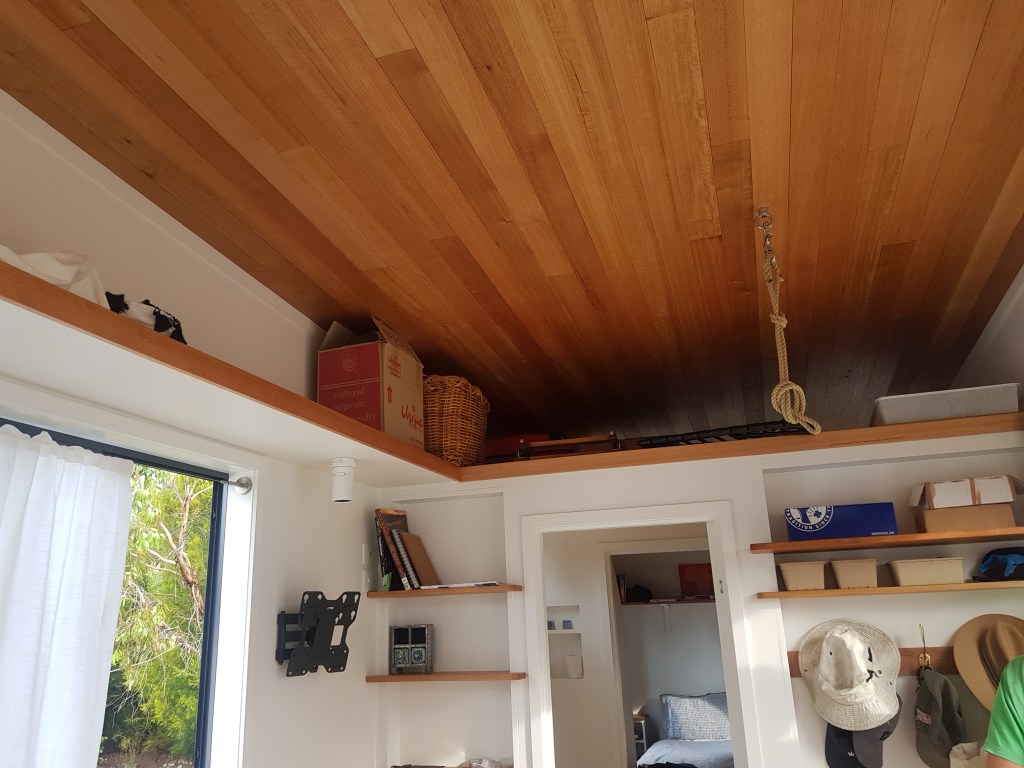
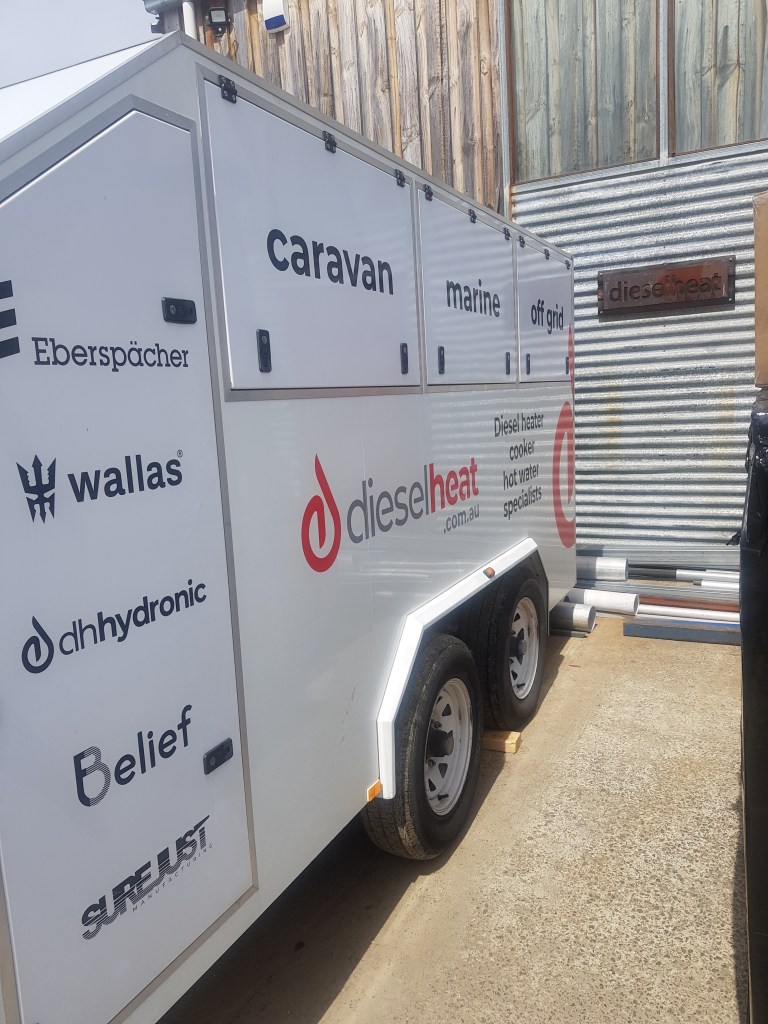
So we camped next to a tiny house when we stayed in Cygnet to get our diesel heater fixed. Patrick and Sabrina had built it – and they were building new tiny houses in the workshop next to DieselHeat, the caravan heater specialists. Here is a picture of their tiny home:

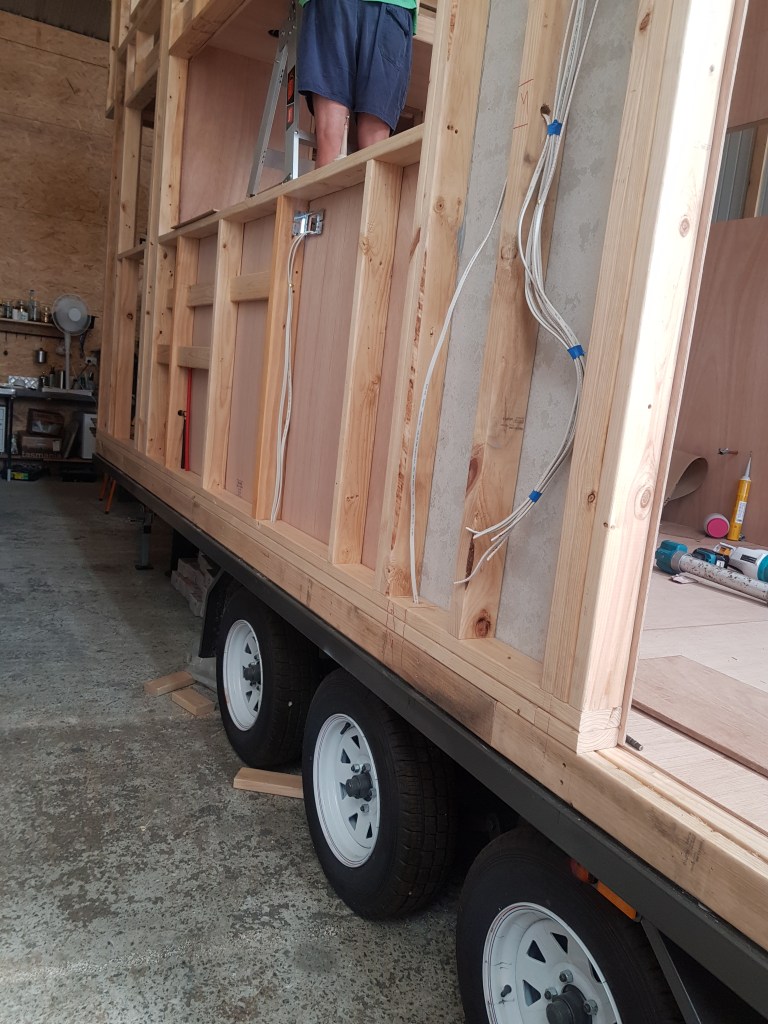
What is a tiny house? It’s not a caravan and not a normal house. It’s something in between: a timber-framed house on wheels that can be towed on public roads to a new location. This means that its width cannot exceed 2.4 metres. The length can vary – the same way the length of a caravan can vary between 6 and 11 metres or so.

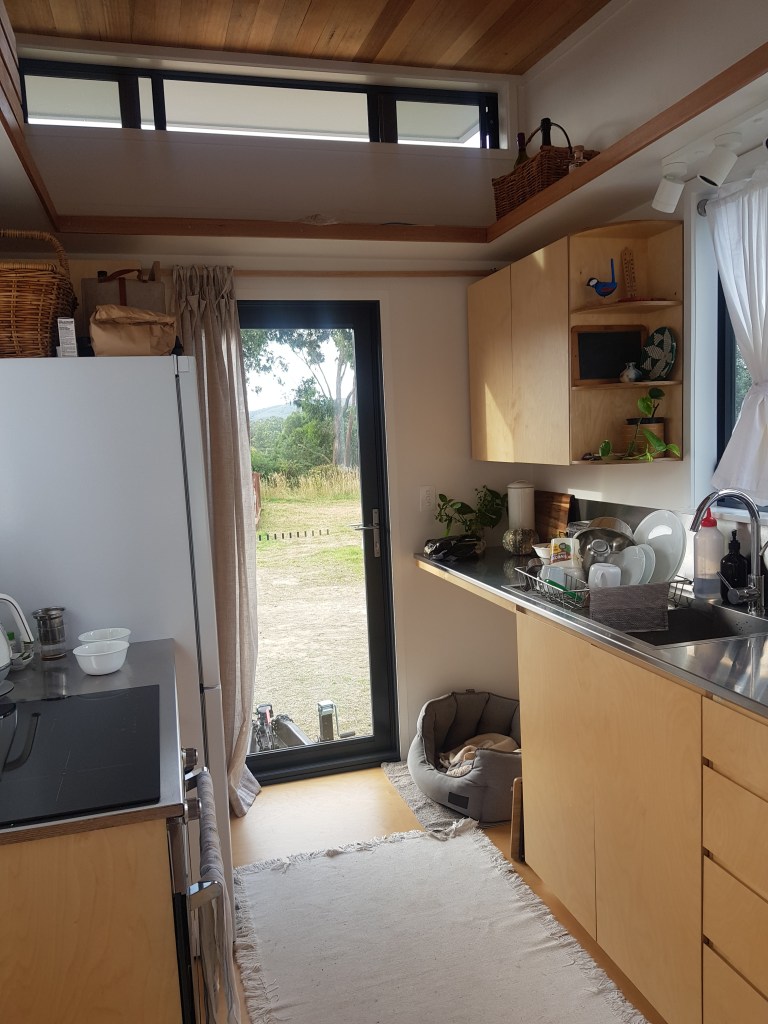
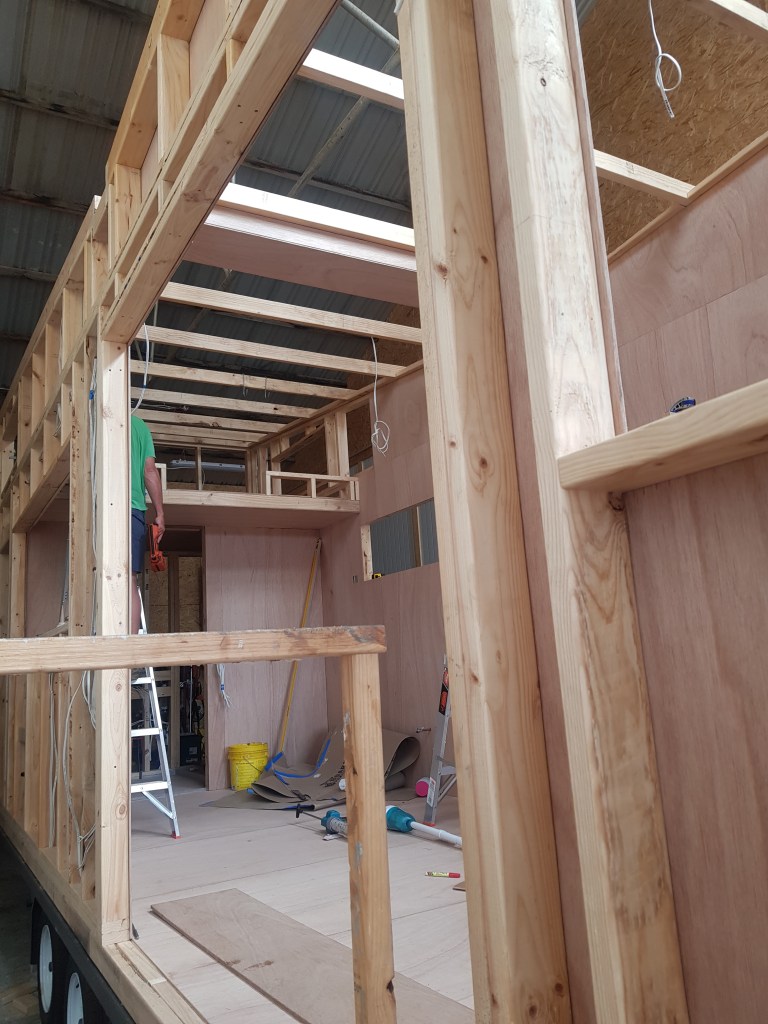
What does it look like from the inside? Patrick’s and Sabrina’s house consists of a bedroom followed by a walk-through bathroom, followed by a living room and kitchen.

There are many different designs. Some people have a loft with the bed upstairs. The current build has this feature. Maybe you can spot it in the pictures below.

Getting a new diesel heater

[This post has a prequel. You can read it here.]

Our cheap Chinese diesel heater had broken down. With summer about to end and single-digit temperatures at night, we decided to play it safe and upgrade to a better, more reliable heater. There was only one specialist for diesel heaters in Australia at the time. Fittingly, it was in Tasmania – and to our happy surprise in one of our favourite places: Cygnet in the Huon Valley.

We booked our camper with “DieselHeat” in the middle of February. Juan, the heater specialist we spoke to, told us we could free-camp behind their workshop for two nights (before and after) with power and access to a bathroom. Nice surprise!

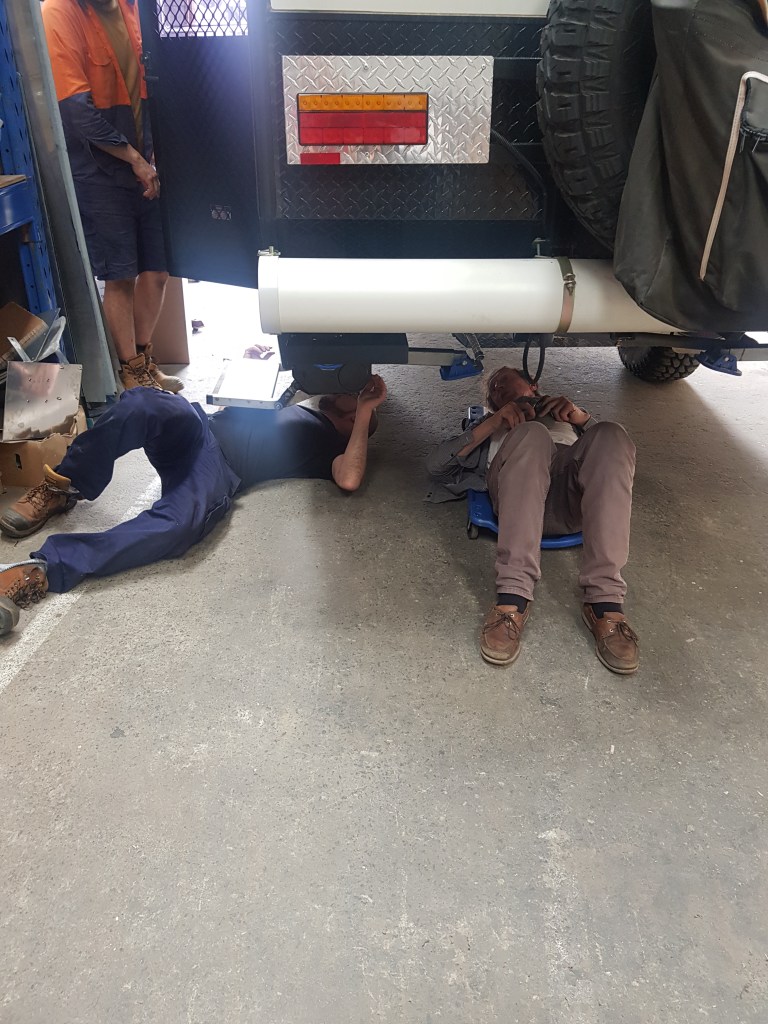
On the picture below you can see Mike and Juan inspecting the newly installed diesel heater from below. We had such a positive experience with the guys from DieselHeat – it was like spending time with old friends.

And there was another surprise: When we arrived, we found out that we would be camping next to a tiny house. It belonged to Patrick and Sabrina from Little Latitude, who had their tiny-house workshop right next to DieselHeat.

You can read more about this tiny house and the one they are building here.

On Maria Island

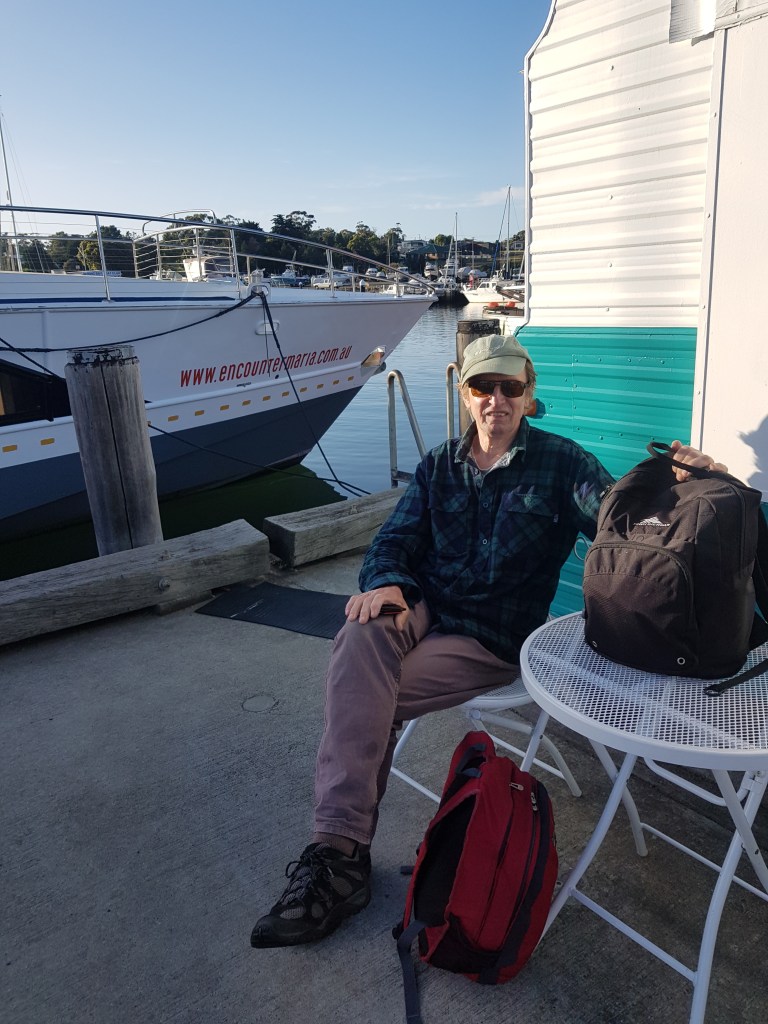
When we returned to our campsite (free, big grassy field behind a country pub) after spending the day on Maria Island, the weather turned cold and grey. While on the island, it was glorious. We had booked a same-day return leaving early in the crisp and clear morning.

The ferry is for people and their luggage only. And bicycles. Maria Island is uninhabited with no shops and no cafes – just a sprinkling of old convict era buildings and an abandoned silo from the sixties. You walk or ride your bike (no bitumen), admire the scenery and the wildlife, and leave no trace. It is possible to stay overnight in tents or cabins.

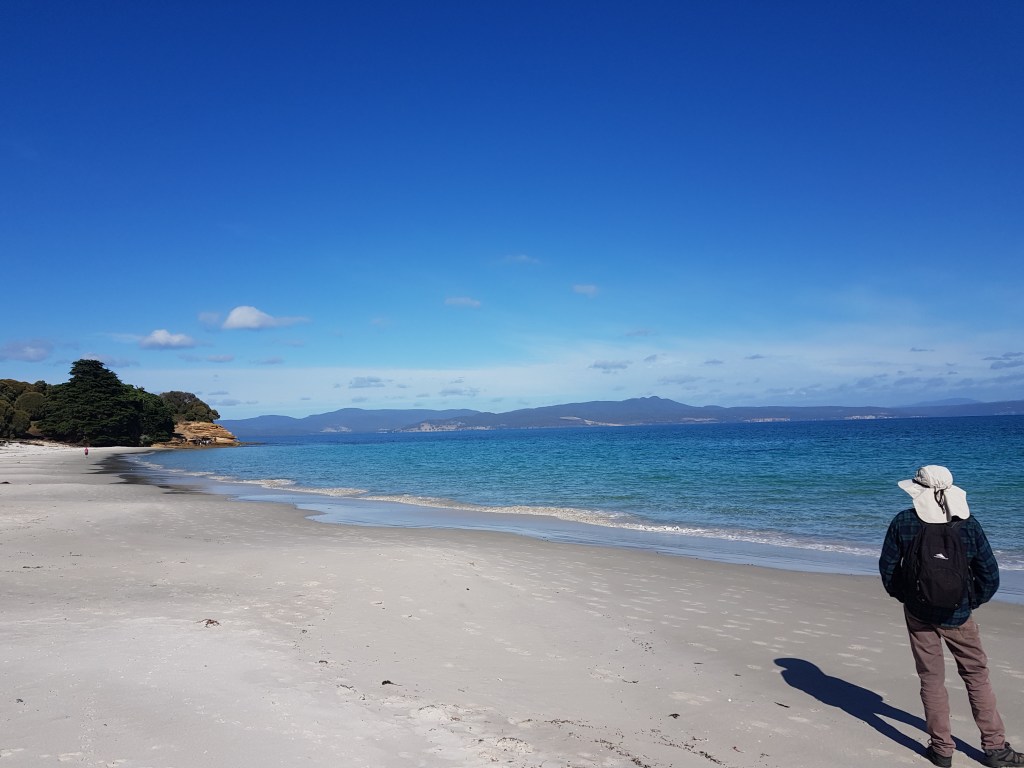
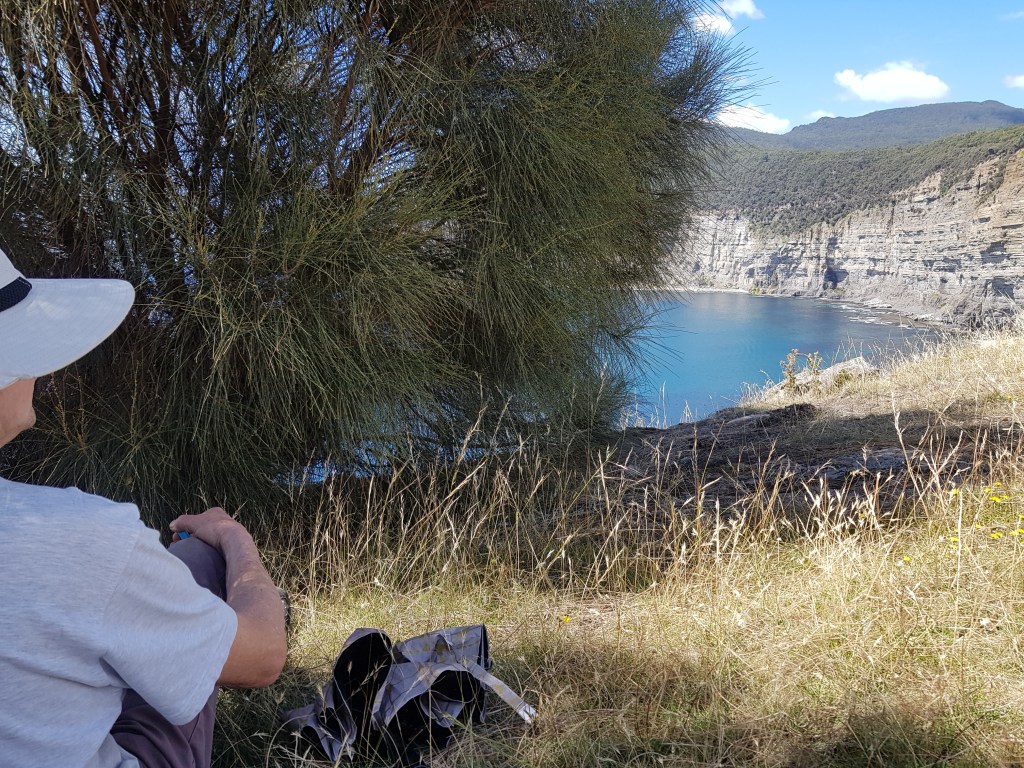
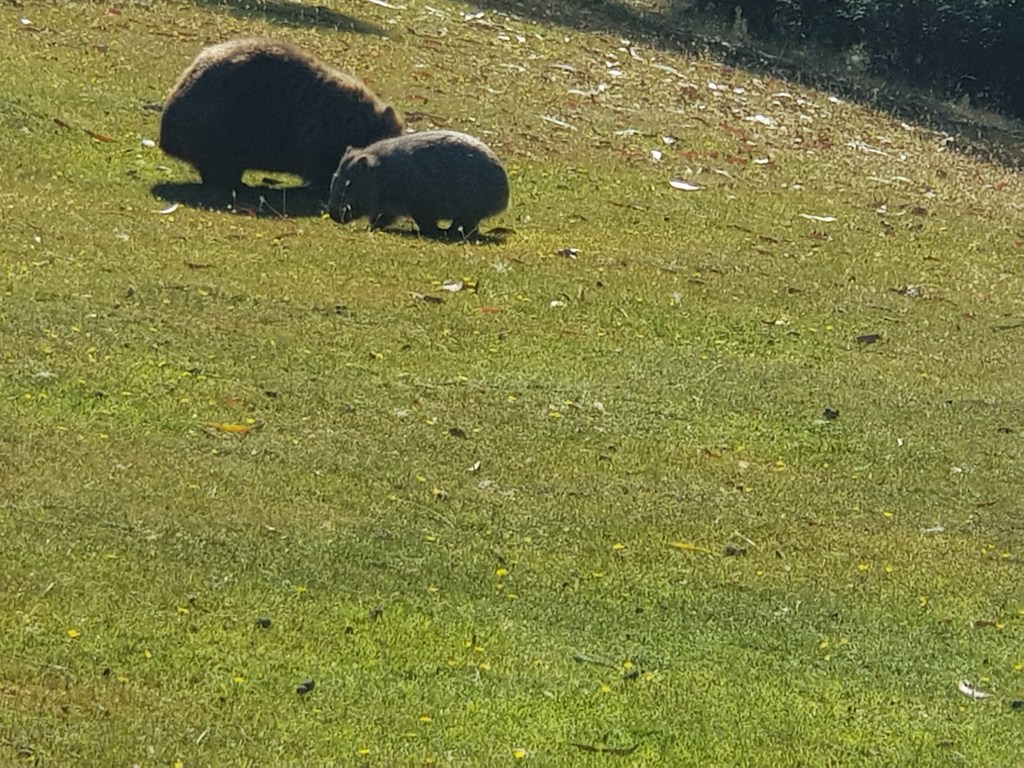
We walked along beaches and cliffs, across forests and abandoned settlements. Maria Island is full of wildlife. We saw wombats and their babies.

We also saw pademelons (really small kangaroos that look like quokkas), and potoroos (smaller mouse-like marsupials). With motor vehicles banned, it is just you, your footsteps, and the sounds of nature – the wind in the trees, the birds, the ocean – and the occasional chatter of other visitors. And there is no visual noise created by ads, billboards, etc.

Freycinet, Wineglass Bay – soaked to the bone

They call it the jewel of the Tasmanian east coast: Wineglass Bay on the Freycinet peninsula is a perfectly shaped crescent beach with crystal clear water right next to The Hazards (four spectacular granite peaks) – one of the most photographed beaches in the world. A top tourist attraction in Tasmania.

Wary of the crowds, we’d been avoiding the area over the Christmas season and school holidays that had just finished. Maybe now was the time to visit. But we didn’t factor in all the other travellers, who had similar thoughts. So, it was still high season. A stressed out vibe, hectic driving, mad parking. People competing for caravan sites. The access road to the national park was in very bad condition with large potholes. The large carpark of the visitors centre busy like a shopping centre.

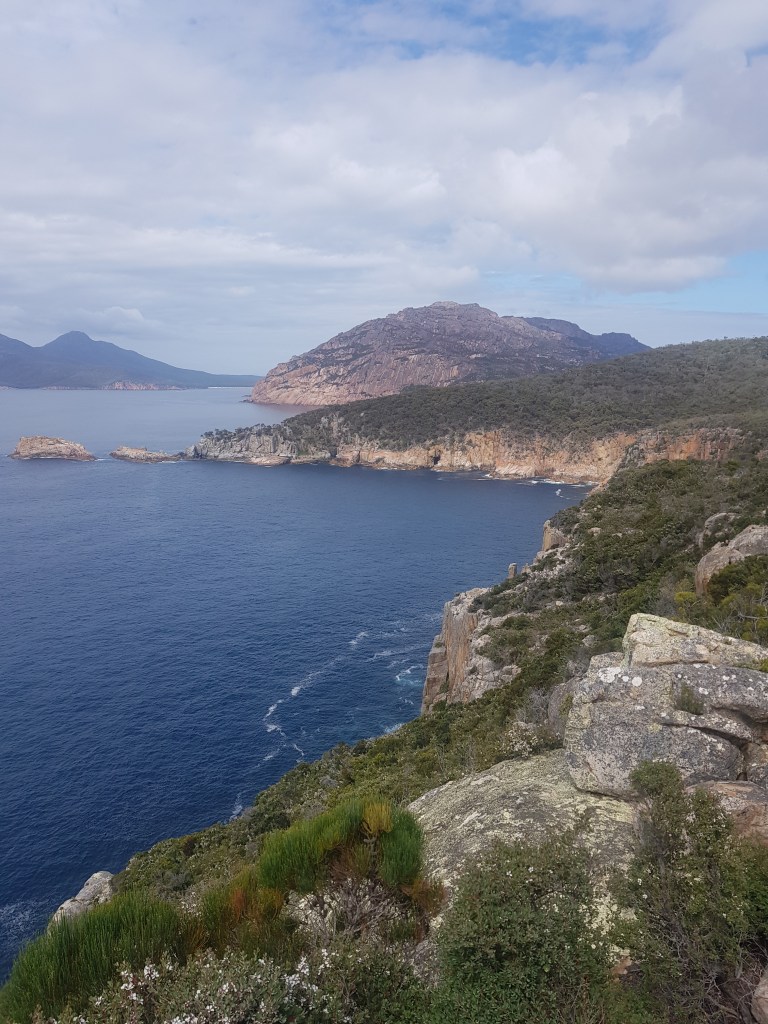
On our first day, we went on a short walk to a lighthouse. On the picture below, you can see the white sands of Wineglass Bay on the horizon like a line between the two peaks. We were hesitant to go on the main walk: Wineglass Bay Lookout. The weather forecast for the next day (our last in the region) was all-day rain.

This is the view of the Hazards from the Coles Bay esplanade.

One day later, it looked like this:

Should we go or not? On the positive side, there would be less people. On the negative, we might get soaked. But we could rely an the everchanging nature of Tasmanian weather. There might be sun. And it wasn’t windy – a big plus. So we went. The carpark was only half full. The hike up the steep mountain side was beautiful in a non-postcard way. Dramatic reveals of rock formations by the shifting clouds, wet shining gums and their fragrance, glorious boulders stacked by giants. Only faint glimpses of the famous beach far down below.

And it rained, stopped, started again, and rained harder. We made it up to the lookout (1.5 hours return) together with a lot of other wet and bedraggled hikers. On the way down, I could feel the water seeping through my layers and inside my jeans. We were wet!

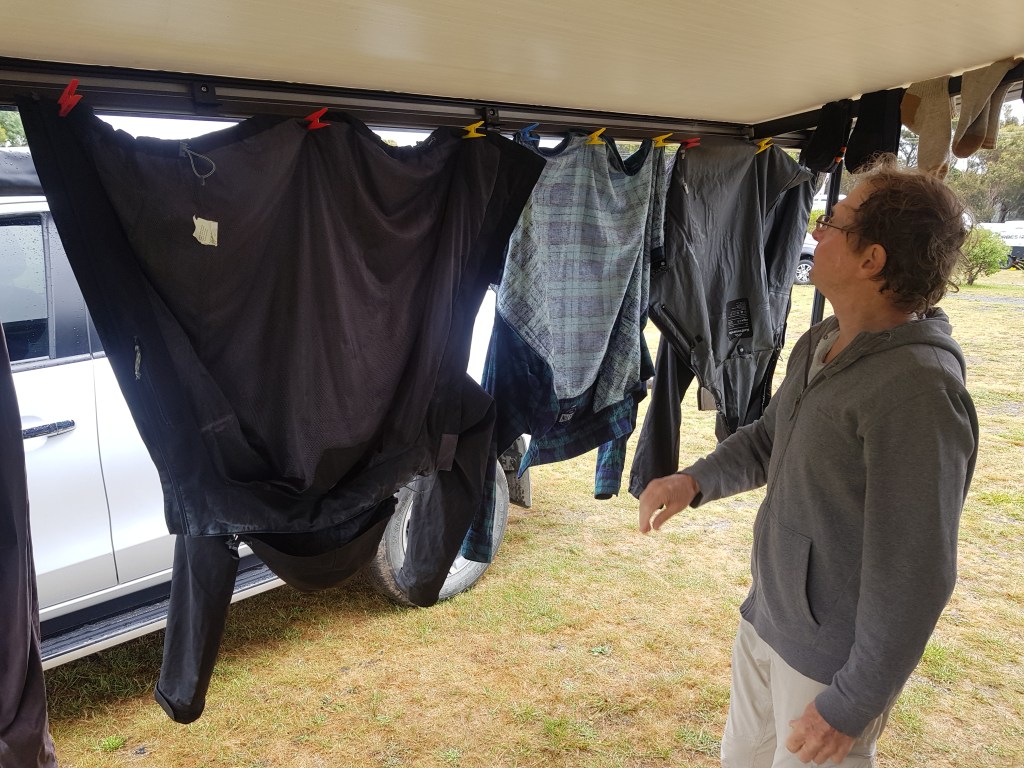
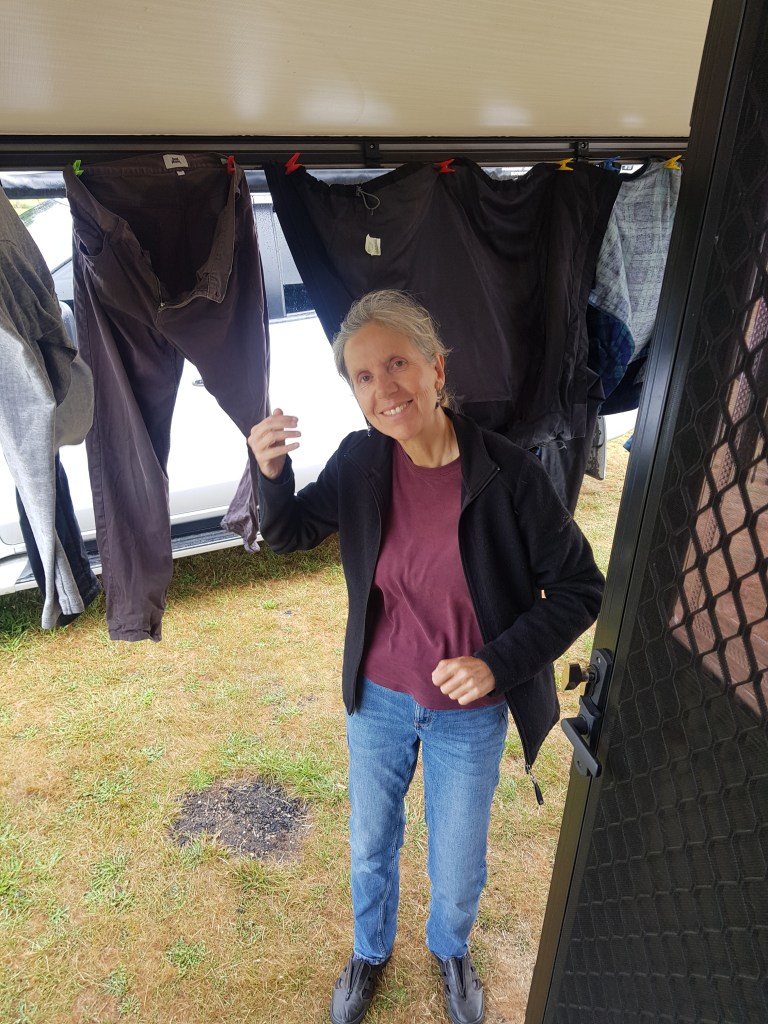
We had to change everything. Here you can see us back at our campsite. Whenever our laundry got a little dry, the next rain shower soaked it again. All day and into the night – as the forecast had said.

Getting the AC replaced

[This post is related to the “trials and tribulations” post about malfunctioning equipment. You can read it here.]

It was faster than expected: The new AC unit shipped from Melbourne arrived within five days and we could get it fixed a few days later. So instead of going straight down the East Coast to the Freycinet National Park, we took a detour via Launceston. The procedure was meant to take something between half a day and two days depending on complications.

The pictures below are from our campsite at Old Mac’s Farm on the southern edge of the city. We got up at sunrise…

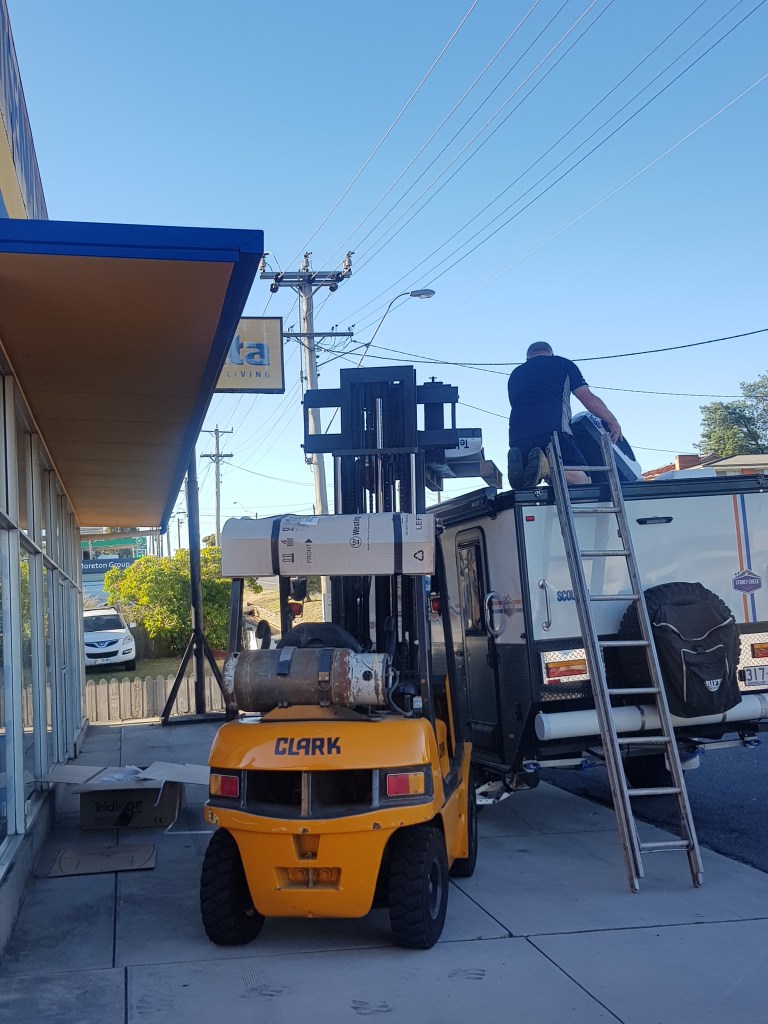
… and made it in time to the electronic appliances shop that would handle the replacement of the air conditioner – on the sidewalk in front of the building along a busy road! (Other caravans had to line up on the curb waiting for their turn.)

The electrician was finished in record time: It took him less than an hour, every move practised a thousand times. But the weather was too cold to test the cooling function of the unit. We had to wait for a hot day… and when would that happen?! At this time we didn’t know that in ten days a 35-degree heatwave (one day) would be waiting for us at the Central Highlands and the AC would save the day.

At the Bay of Fires cont.

We stayed for a whole week moving on from the caravan park to a council-run RV park at the other side of St Helens. It was large and spacious, well taken care of, and had sweeping views of Georges Bay. A laundromat and a coin-operated shower in walking distance. And if you walked a little longer, a provedore where you could buy fantastic sourdough bread.

At the end of our stay (it was a fullmoon weekend) there was an unexpected bonus: The Bay of Fires Arts Minifest put a rainbow over the cold and rainy weather. Most of it took place at the Panorama Hotel just down the road from where we stayed. The best part was the free live music on the large wooden deck overlooking the bay. The crowd was small but committed. Many seemed to know each other. A few women danced (not just me). We danced… in the sun, in the rain, into the sunset, and sang along with the songs we knew. Led Zeppelin, Dire Straits, Bob Dylan, and many more.

At the Bay of Fires

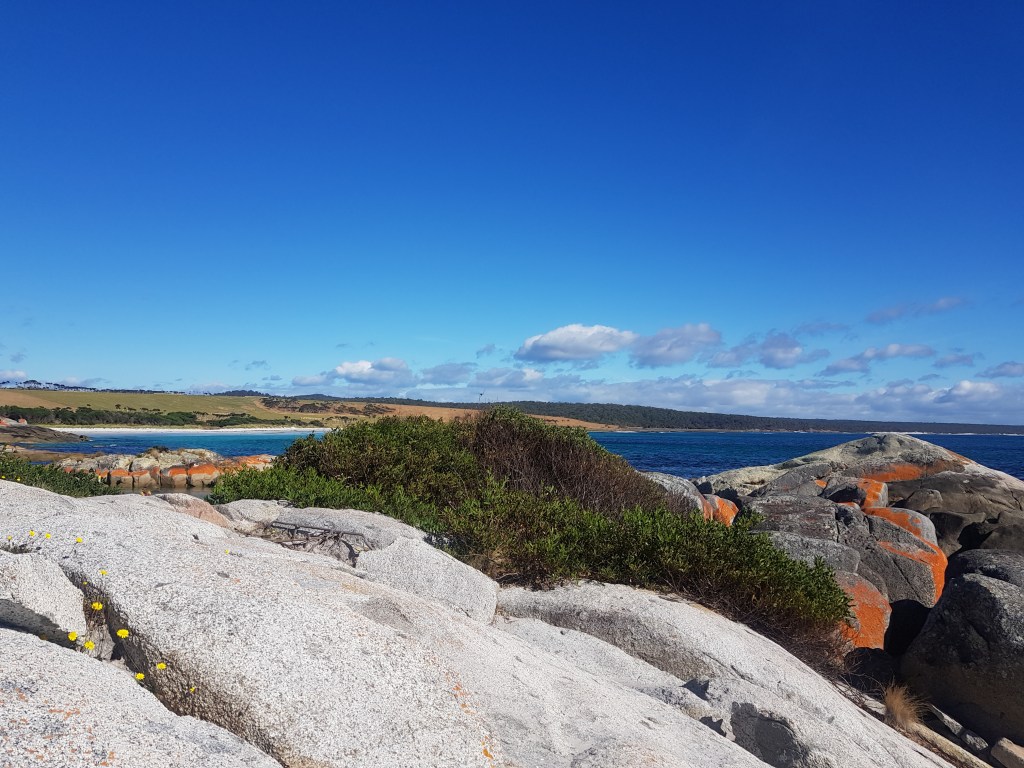
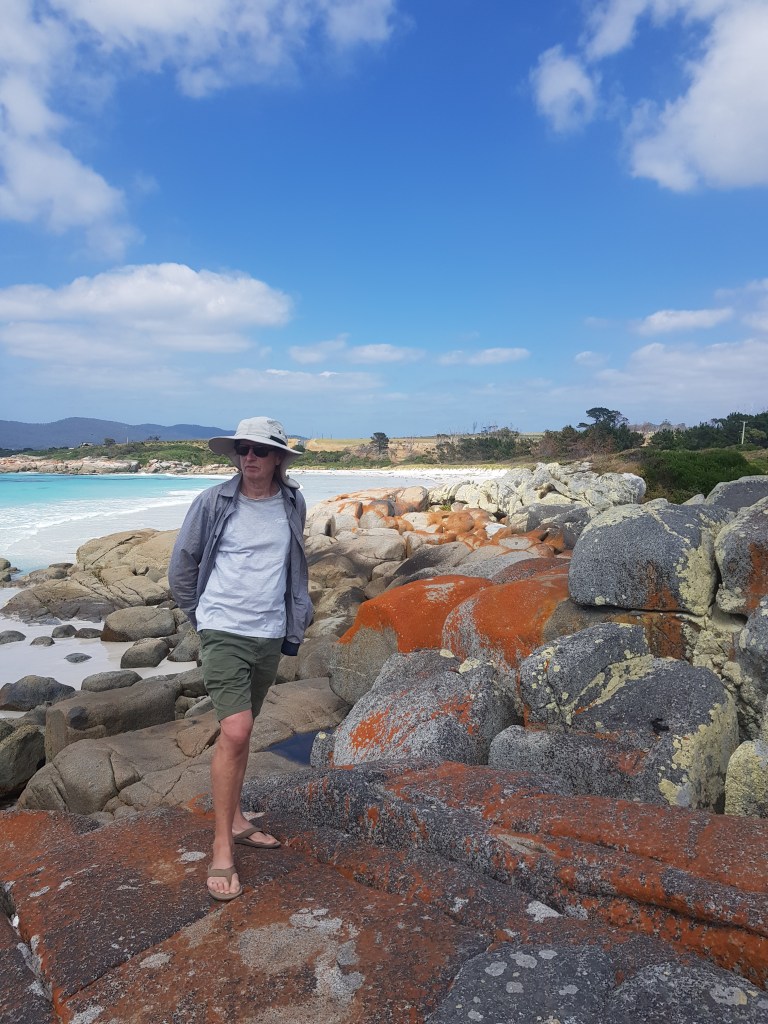
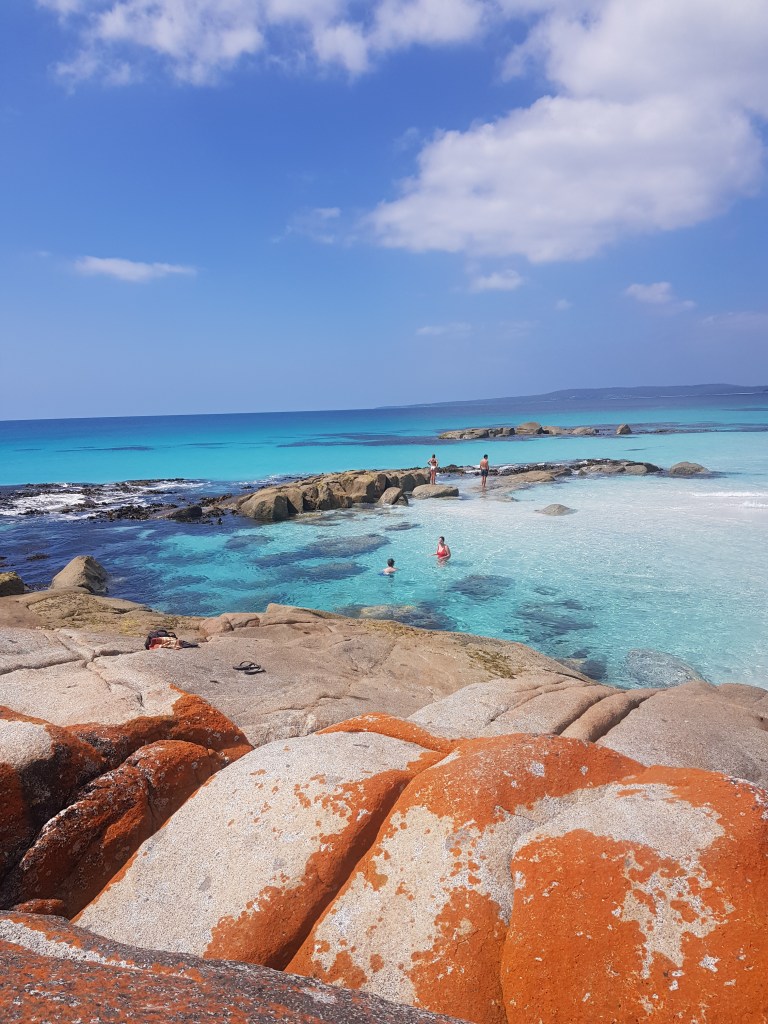
Speechless. How can something be so beautiful? The colours are real, the photos unedited…

The Bay of Fires is located at the North-East coast of Tasmania. It is famous for its red-orange granite boulders and the free camping along the beaches (similar to Recherche Bay). With the Tasmanian school holidays still going, we decided to have a look at these free camps first and booked into a caravan park at St Helens (packed).

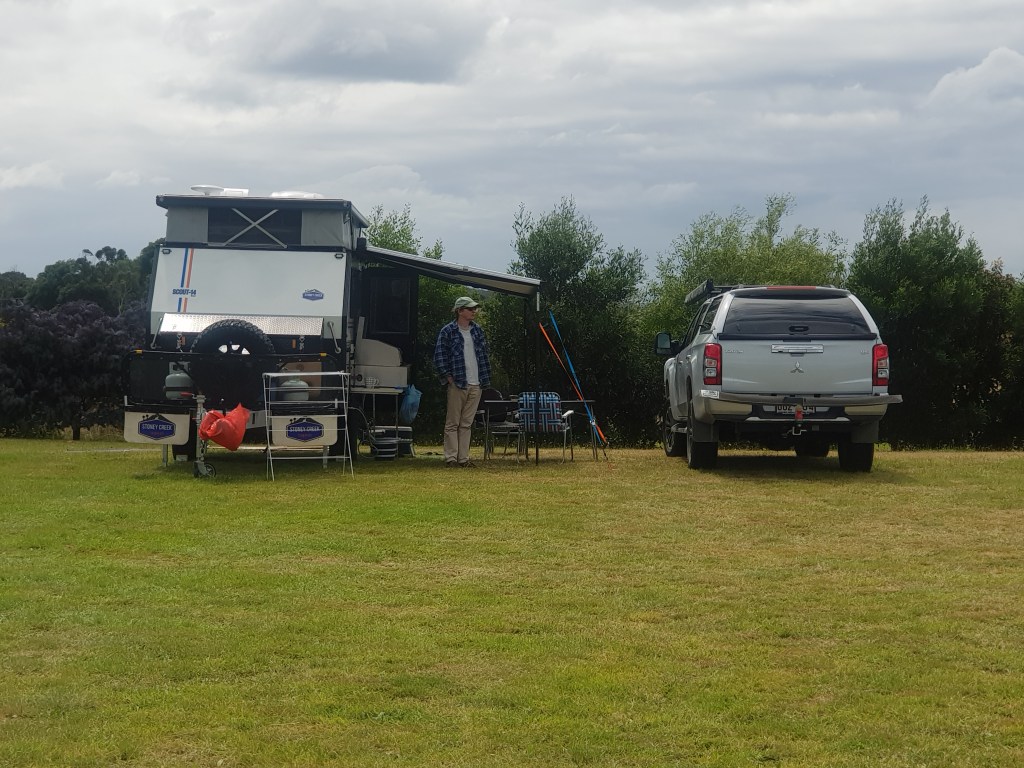
It was a very nice caravan park with clean and modern amenities. We could do our laundry and enjoy a bit of civilisation. And as it turned out, the free camps were not that attractive. Crammed with caravans, motorhomes, and trailers; only a few sites with ocean views; and a bit of a cowboy vibe – first come, first served. We even witnessed an instance of road rage with caravans cutting each other off to get to a vacant site. Reviews on WikiCamps reported endless circling of prospective campers all day long. Very unpleasant. We had experienced this on our first day at the Franklin Foreshore – the clouds of dust and the stares of the passengers.

Existence blessed us with shimmering summer mornings. We could even go swimming. In the afternoons the weather reminded us that we were still in Tasmania: Temperatures dropped, the wind turned into gales, and sudden showers had us reach for our rain jackets.