After six months on the road, we need a break from travelling and a break from the caravan. A kitchen that remains in one place and doesn’t require daily setup. Cooking without wind and rain. No more emptying of toilet cassettes. A break from hitching and unhitching and pushing up roofs and packing away everything when moving to a new site.
We are now in the countryside of the southwest corner of WA waiting for the Easter school holidays to pass (it’s the usual story: everything on the coast is booked out). Soon we will be moving closer to the larger Perth metropolitan area and join civilisation again.
It’s been an unforgettable journey. We’re so glad that we overcame our initial trepidation (being newbies at caravanning) and jumped into the river of life. It was one of the best decisions we’ve made.
Thank you for reading this blog. One day we will be travelling again and happily write new chapters to this blog.
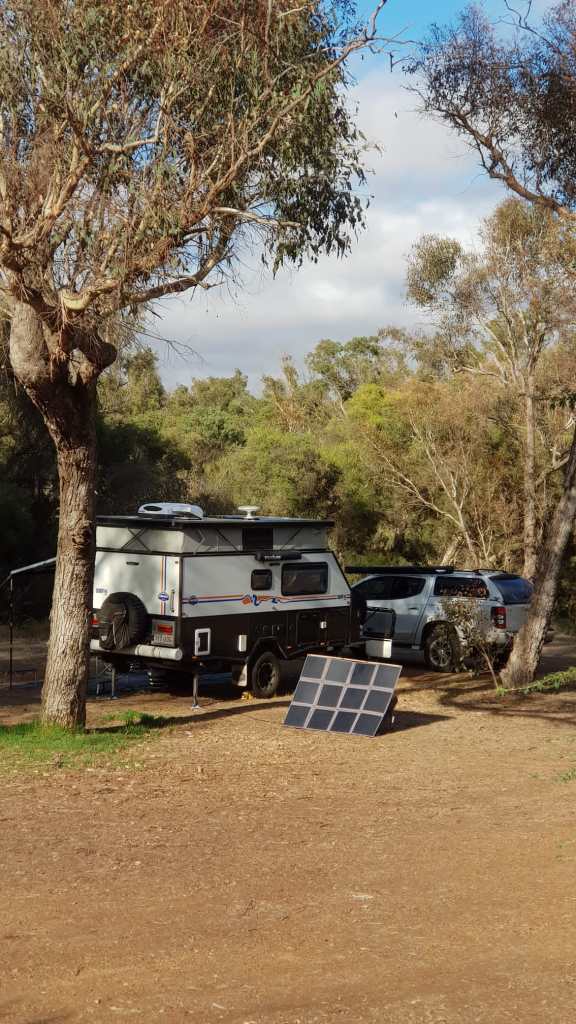
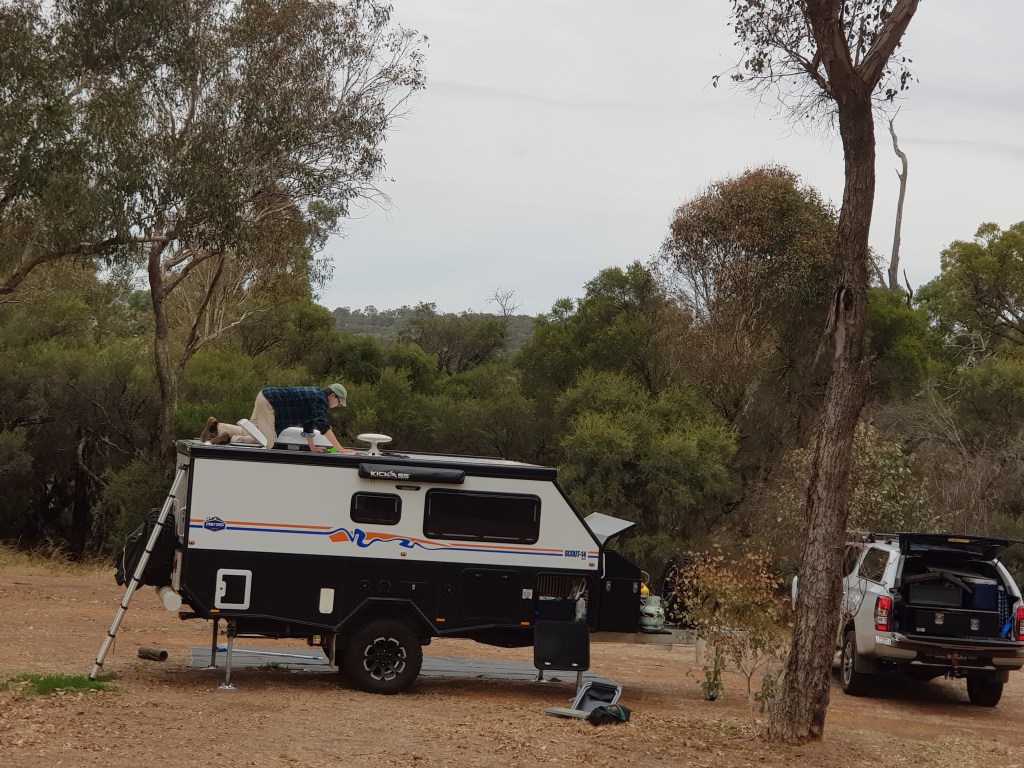
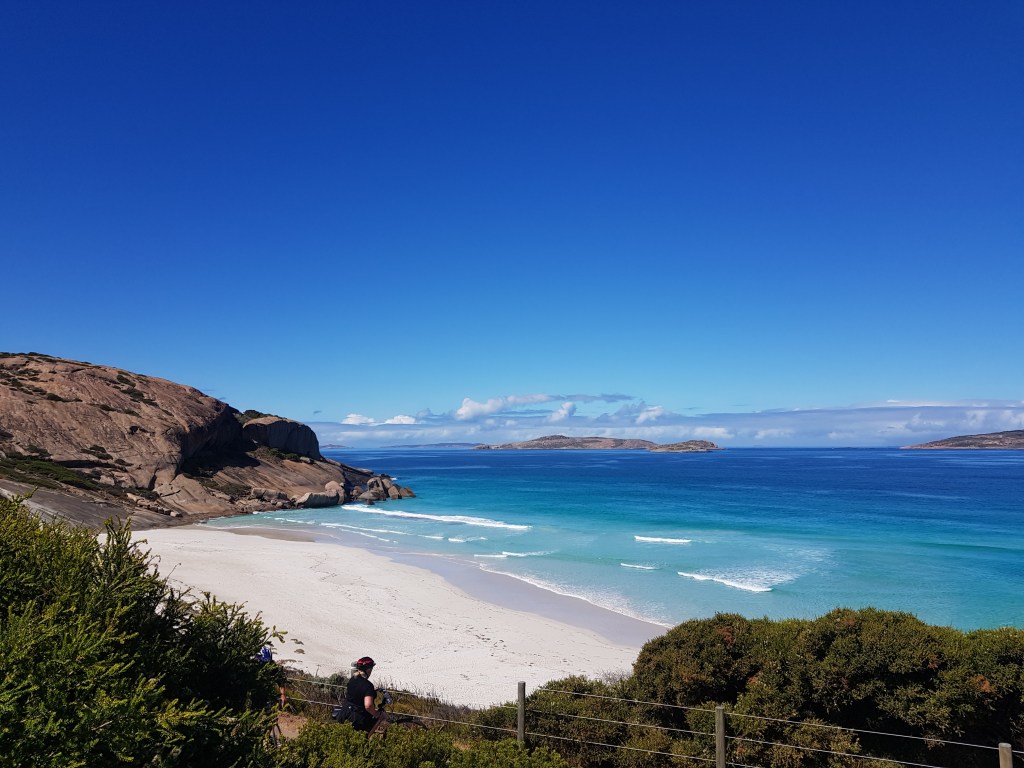
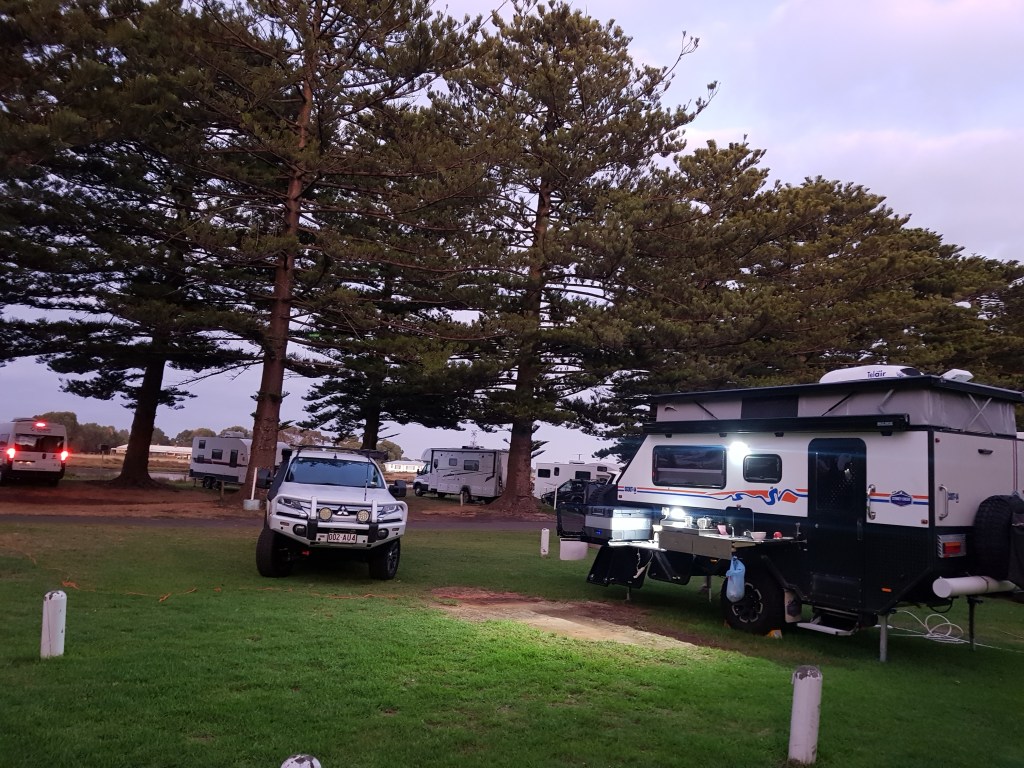
Here are some pictures of us and our beloved caravan:
Mud-soaked and weary, we arrived at Norseman where we stayed for a couple of nights at the free RV park. It rained most of the time and cleaning our dirty gear had to wait until Esperance.
Everything in Esperance was booked out. Mike (the hero) gave it another try and scored the last remaining place in a caravan park. Later on, he succeeded in extending our stay from two to four days by switching sites. We expected a lousy site, possibly next to a road or opposite the garbage… but life gave us this:
Yes, that turquoise strip is the Indian Ocean. And walking along the bay looked like this:
We had busy and glorious days at Esperance. The bay is actually an archipelago similar to what I’ve seen in Stockholm – lots of small and larger rock islands. It is very beautiful and aptly named the Bay of Isles (or Recherche Archipelago).
Once we crossed the border into SA (South Australia), our mood lifted. It was warm, actual summer weather. We loved the wide, open road (no ups and downs, no serpentines) and the vast skies. The red dirt, the smell of the gum trees, the songs of the magpies, and the laughter of the kookaburras.
Taking it day by day, we discovered Coonalpyn with its stunning silo art. It also has a very innovative self-service caravan park right next to a gorgeous outdoor swimming pool. How nice it is to float in water and watch the sunset after a day of driving!
We drove through Murray Bridge and around Adelaide unexpectedly finding ourselves in the Barossa Valley (a famous wine region in SA). Further north we found the lovely Auburn Showgrounds Caravan Park where we spent the weekend.
The Eyre peninsula was next on our itinerary. Everything on the coast was booked out though. We should have known that we were not the only grey nomads avoiding the tropics. A fellow camper told us that last year there were 45,000 new registrations for caravans. All these people need to go somewhere.
We took it as a hint from existence and stayed inland on the direct route with overnight stays at Kimba Roadhouse (owned by an Indian family and famous for its curries) and Penong caravan park (next to old metal windmills used for pumping water). Our next destination was the Nullarbor plain.
To make it easier to say goodbye to Tasmania we booked our first stay on the mainland in Port Fairy. The name says it all – it is a wonderful historic fishing village at the end of the Great Ocean Road in Victoria. I only have photos of the breakfast before we left. Why? The weather kept to the Tasmanian theme. It was cold, rainy, and windy. Here we are in the early morning getting ready to set off into South Australia.
What would we do after Tasmania? The original plan was to do an anti-clockwise lap around Australia going north across the top end into WA (Western Australia) and then tracking down the west coast. Instead, we opted to take the direct route, fast. Several factors contributed to this decision: A cyclone had caused widespread damage to roads and infrastructure in Northern WA. Far North Queensland was affected by severe flooding. And we had exhausted our need for sightseeing in Tasmania. Frankly, we needed a break from travelling. A longer break. We used to live in Fremantle and had friends there.
We’ve been four months in Tasmania and on the 14th of March it was time to leave. Here you can see us lining up for the late-night departure on the Spirit of Tasmania dock at Devonport. (The photo is taken from inside our car looking at the lines in front of us. The ferry is on the left behind the cars.)
It was a long wait until boarding and to pass the time I started making a list of the most notable locations and events during our stay (totally subjective).
So we left Strahan and headed back into the wilderness. On winding roads, but not as bad as the road to Queenstown. The turn-off to Rosebery golf course was 7 km before town and easy to miss. A small sign and then a steep loop into a wooded hilltop, there it was: one of the steepest golf courses in the world and incredibly scenic. Only a few caravans were there and we managed to get a spot with a view.
Beautiful nature, beautiful weather, friendly fellow campers. Ten dollars a night per honesty box. When we drove to town for shopping, we discovered that, contrary to its bucolic name, Rosebery was a large active mine – 4 km wide and 1.5 km deep, 500 employees, a greenish lake with effluent, excavated hills, most of the activities underground.
We stayed another day and visited Montezuma Falls – a solid 3-hour return hike along an old mining tramway that had been abandoned about a 100 years ago. It brought back memories of hiking in Europe, where many tracks follow old trading routes or Roman roads. The river valley to the falls used to be bare from mining but had been reclaimed by the rainforest.
Then rain… and our wettest departure/set down any where on our journey. We packed up in pouring rain wading through large puddles, collecting wet items in plastic bags, and moved on to remote and tiny Waratah with a caravan park with all amenities: power, water, and laundry. You paid the post office lady – and she reduced the price by half because hot water was only sometimes available. Power connections were known to be dodgy as well but for us everything worked out just fine.
See the caravan park on the other side of the lake? And that’s the sign:
We had grey-nomad heaven for a couple of days with fantastic weather and the friendliest bunch of other campers. It was like living in a small village where everybody talked to everybody, laughed with each other, shared stories… and then those people left. And the weather turned cold and rainy. Travelling in a caravan is a master class in accepting change.
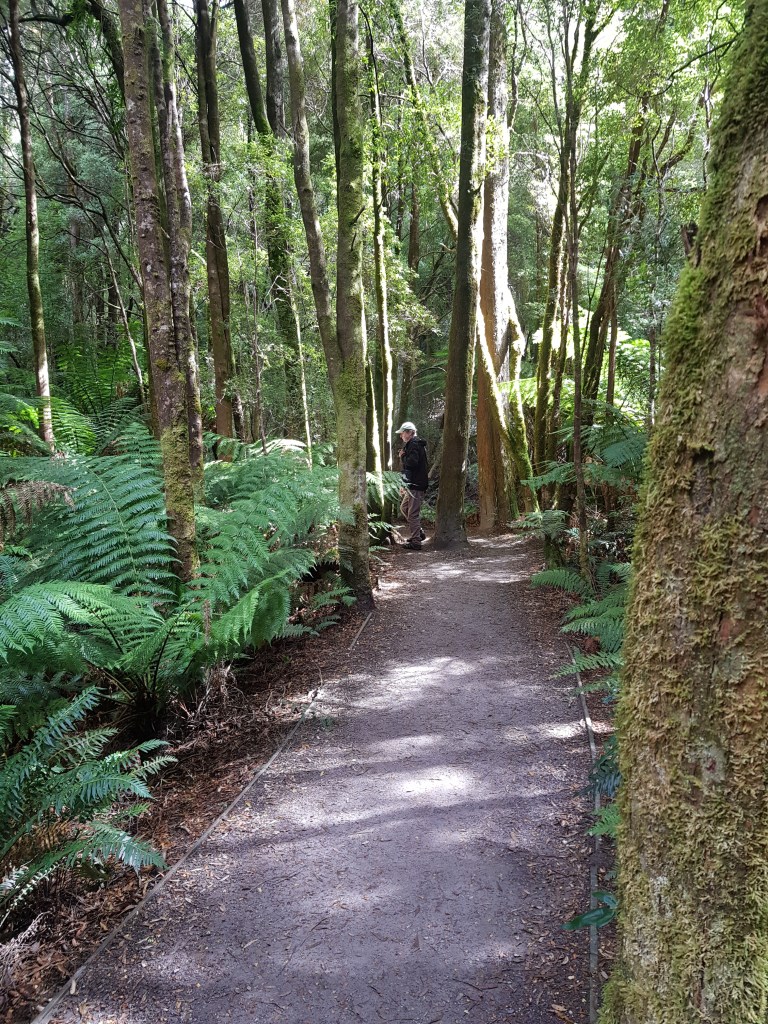
The Tasmanian west coast is different. The rainforest is almost like a jungle, densely packed with trees and shrubs. It is wetter, wilder. Often tree trunks are covered in moss or tree ferns.
The road from Derwent Bridge to Queenstown had the tightest and scariest serpentines we encountered on the island. And the contrast between the national parks and what lies beyond was dramatic. Driving into Queenstown was like driving into an open-cut mine. The hills and mountains around it were scarred: dug up, dug into, pierced through, many without vegetation. The town itself was indescribable. A mix of shacks, sixties townhouses, and grand buildings from the Goldrush era.
We stayed overnight in the RV parking area of the Queenstown oval (RV = recreational vehicle). The oval is infamous for its gravel surface and attracted quite a lot of sightseers while we were there. (Aussie football or AFL is usually played on thick grass but pollution from mining made it hard to grow it.) It was an eerie place to stay but we were surrounded by a bunch of very friendly campers. Wonderful.
Onto Strahan, the picturesque harbour village. Let’s start with a romantic picture of it:
The reality, however, was quite different. Two big cruise terminals dominate the foreshore. The world-famous Gordon River cruise booked out for weeks despite steep prices. International tourism. Five-star holiday homes. Hectic visitors.
We stayed at the initially pleasant Strahan golf club where you can park your RV for a small fee (honesty box). When we pulled in around lunchtime, we thought it was rather full. Yet more and more caravans and motorhomes appeared and crammed into any remaining nook and corner. Chatting with the people next to us (all from WA), we realised that a lot of campers travel anti-clockwise around Tasmania, from the ferry in Devonport down the west coast, across the highlands to Hobart and the east coast. We were headed in the opposite direction.
On the second day a particularly loud group crowded in close to us – and we were ready to leave. But where to go? To Zeehan, another mining town? Existence send us tip via another traveller from WA: Go to Rosebery golf course. You will be pleasantly surprised.
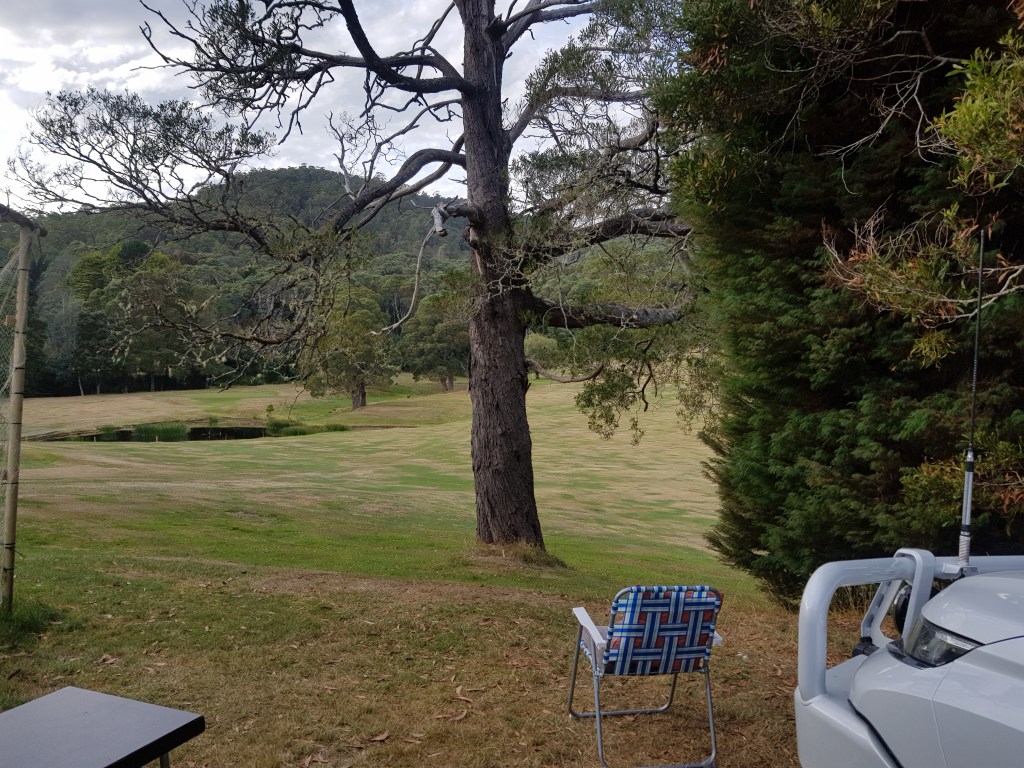
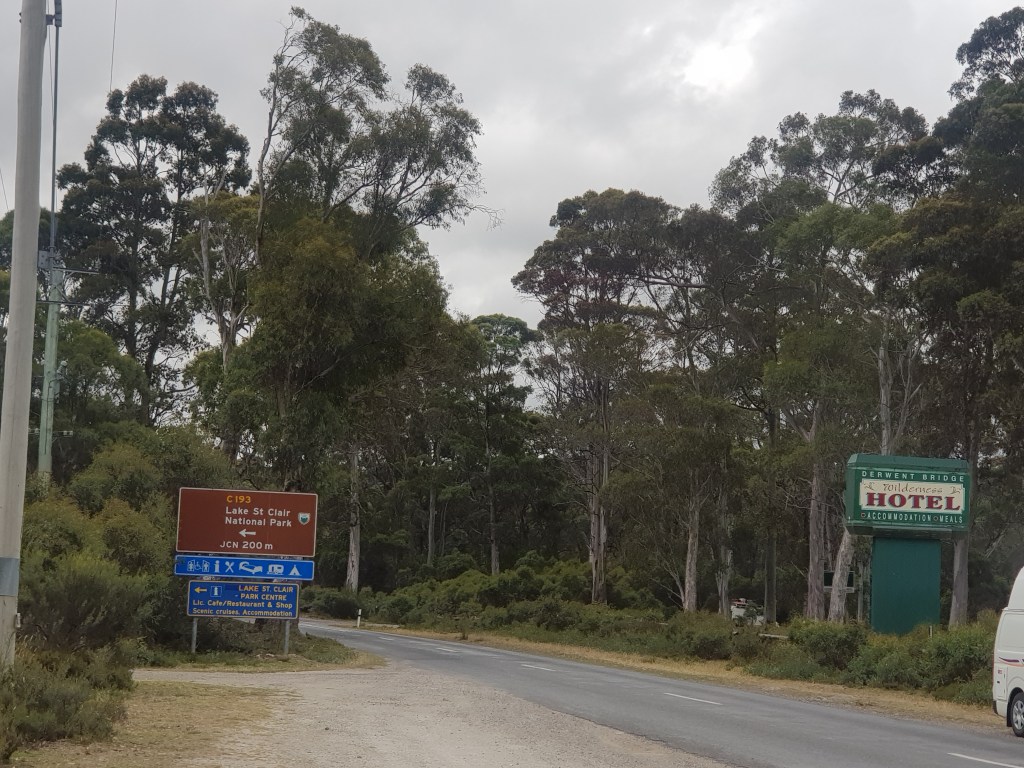
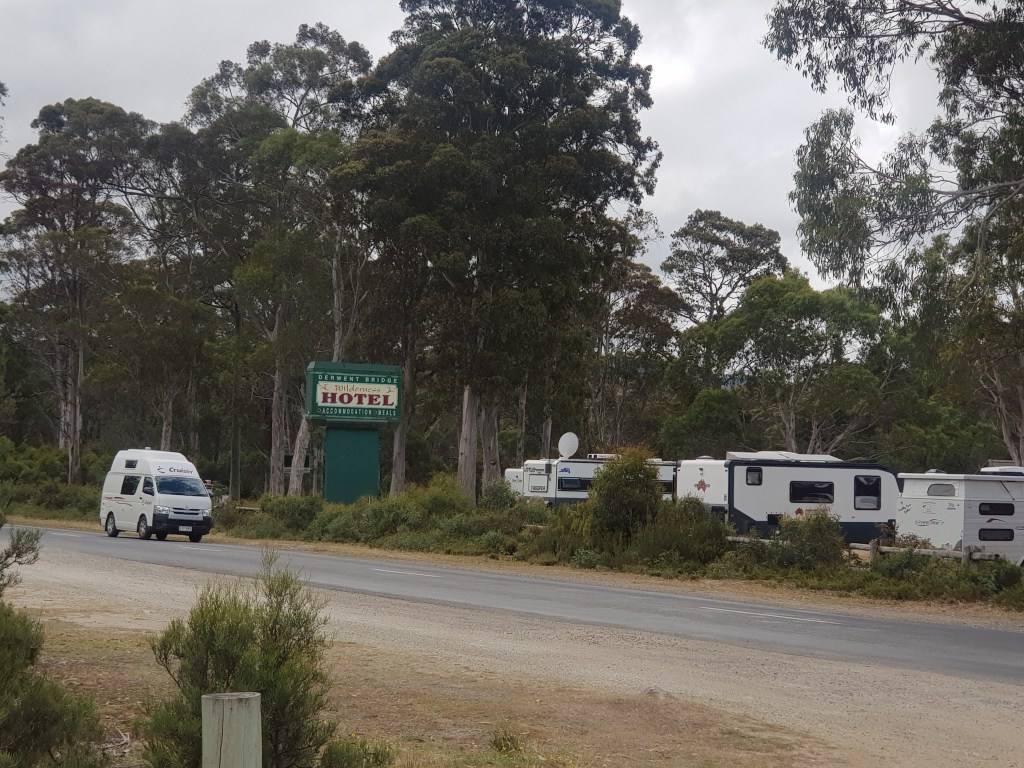
With only weeks left before returning to the mainland, it was time for the last leg of our Tasmanian journey: go West. We stayed for three days at the remote, pleasant, and half empty Wayatinah caravan park. Then we moved on to free camping next to the Derwent Bridge Wilderness Hotel close to the southern end of the Overland track at Lake St Clair.
Seen from the outside you wouldn’t guess the inside of the hotel. It looks like a Swiss ski resort, with a high ceiling and a huge fireplace. Usually packed with hungry nomads and thirsty trekkers. A bartender complained to us that “it never stops”.
Rainy, cold, overcast – Lake St Clair was shrouded in mists with occasional beams of sunlight. And there we saw our second tiger snake, sunning itself curled up on the side of a path just a few steps from a sign alerting hikers not to approach snakes. No, I didn’t take a photo of it. Instead, I took a picture of this gorgeous alpine gum tree.
They call it the jewel of the Tasmanian east coast: Wineglass Bay on the Freycinet peninsula is a perfectly shaped crescent beach with crystal clear water right next to The Hazards (four spectacular granite peaks) – one of the most photographed beaches in the world. A top tourist attraction in Tasmania.
Wary of the crowds, we’d been avoiding the area over the Christmas season and school holidays that had just finished. Maybe now was the time to visit. But we didn’t factor in all the other travellers, who had similar thoughts. So, it was still high season. A stressed out vibe, hectic driving, mad parking. People competing for caravan sites. The access road to the national park was in very bad condition with large potholes. The large carpark of the visitors centre busy like a shopping centre.
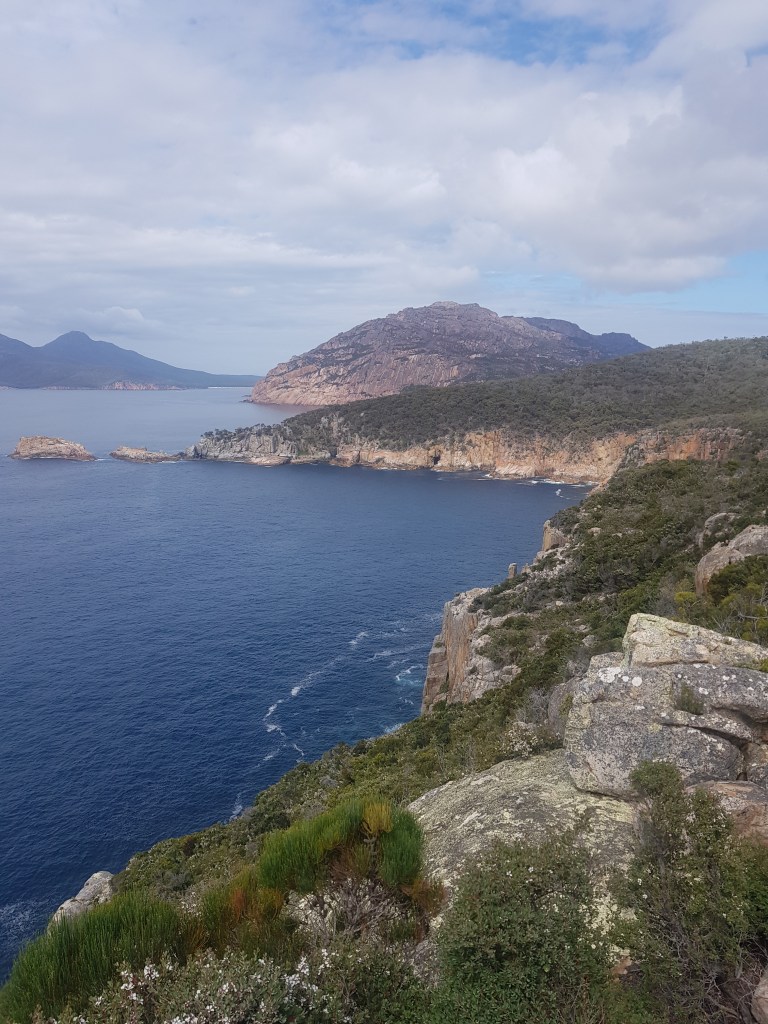
On our first day, we went on a short walk to a lighthouse. On the picture below, you can see the white sands of Wineglass Bay on the horizon like a line between the two peaks. We were hesitant to go on the main walk: Wineglass Bay Lookout. The weather forecast for the next day (our last in the region) was all-day rain.
This is the view of the Hazards from the Coles Bay esplanade.
One day later, it looked like this:
Should we go or not? On the positive side, there would be less people. On the negative, we might get soaked. But we could rely an the everchanging nature of Tasmanian weather. There might be sun. And it wasn’t windy – a big plus. So we went. The carpark was only half full. The hike up the steep mountain side was beautiful in a non-postcard way. Dramatic reveals of rock formations by the shifting clouds, wet shining gums and their fragrance, glorious boulders stacked by giants. Only faint glimpses of the famous beach far down below.
And it rained, stopped, started again, and rained harder. We made it up to the lookout (1.5 hours return) together with a lot of other wet and bedraggled hikers. On the way down, I could feel the water seeping through my layers and inside my jeans. We were wet!
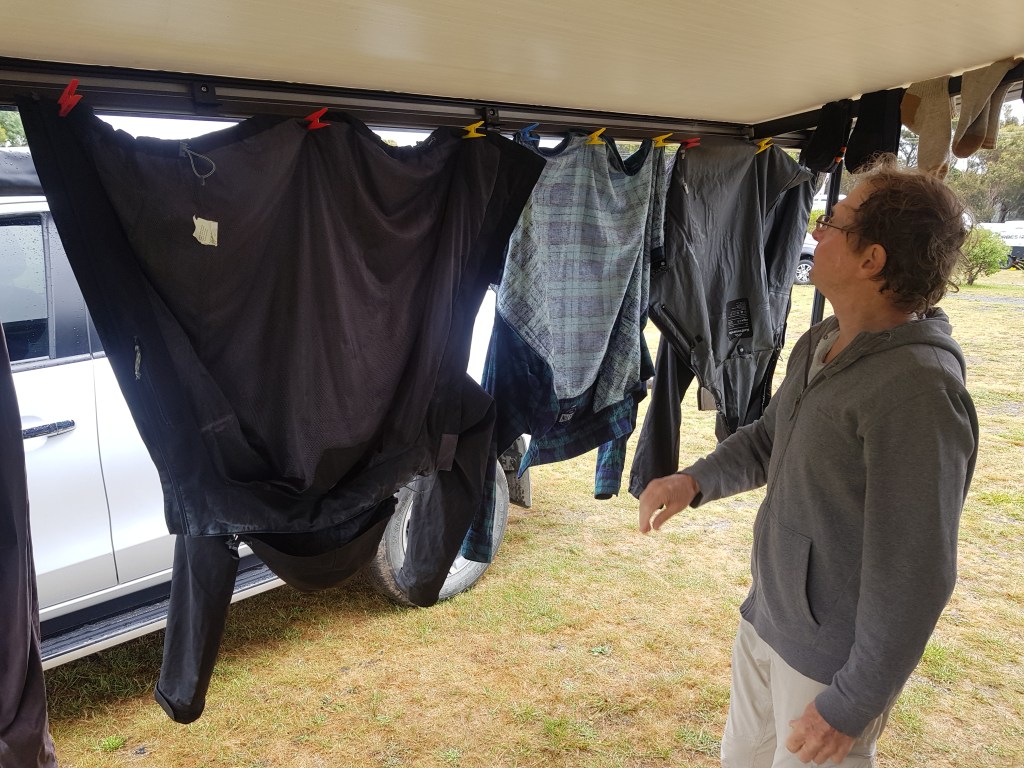
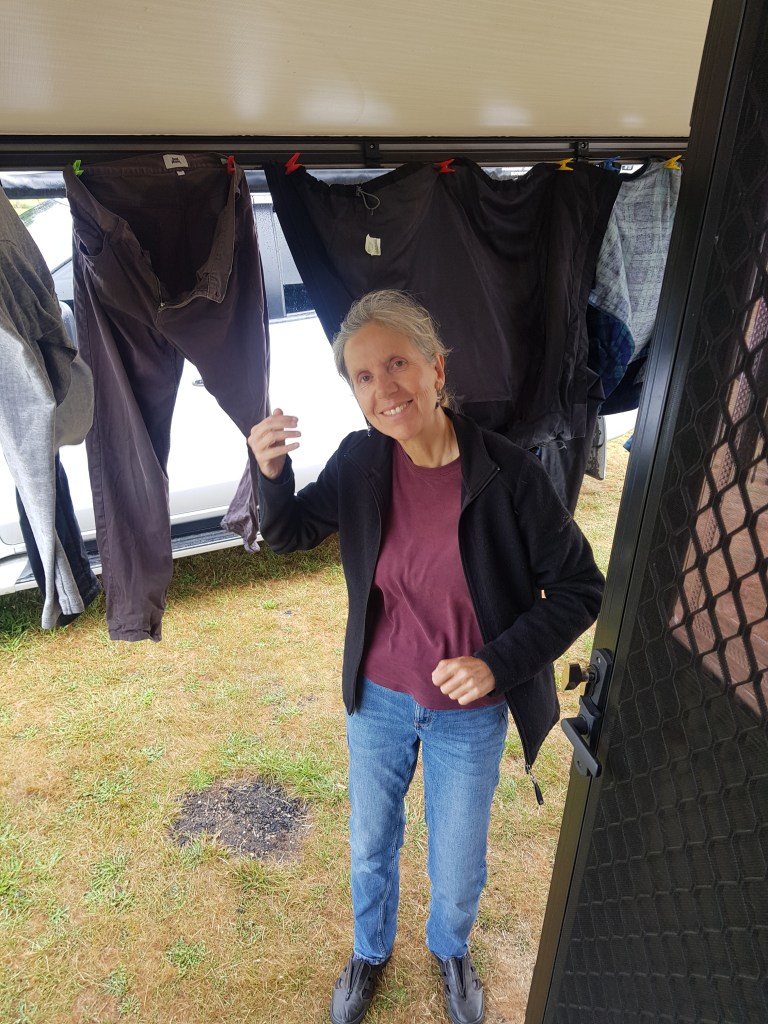
We had to change everything. Here you can see us back at our campsite. Whenever our laundry got a little dry, the next rain shower soaked it again. All day and into the night – as the forecast had said.
[This post is related to the “trials and tribulations” post about malfunctioning equipment. You can read it here.]
It was faster than expected: The new AC unit shipped from Melbourne arrived within five days and we could get it fixed a few days later. So instead of going straight down the East Coast to the Freycinet National Park, we took a detour via Launceston. The procedure was meant to take something between half a day and two days depending on complications.
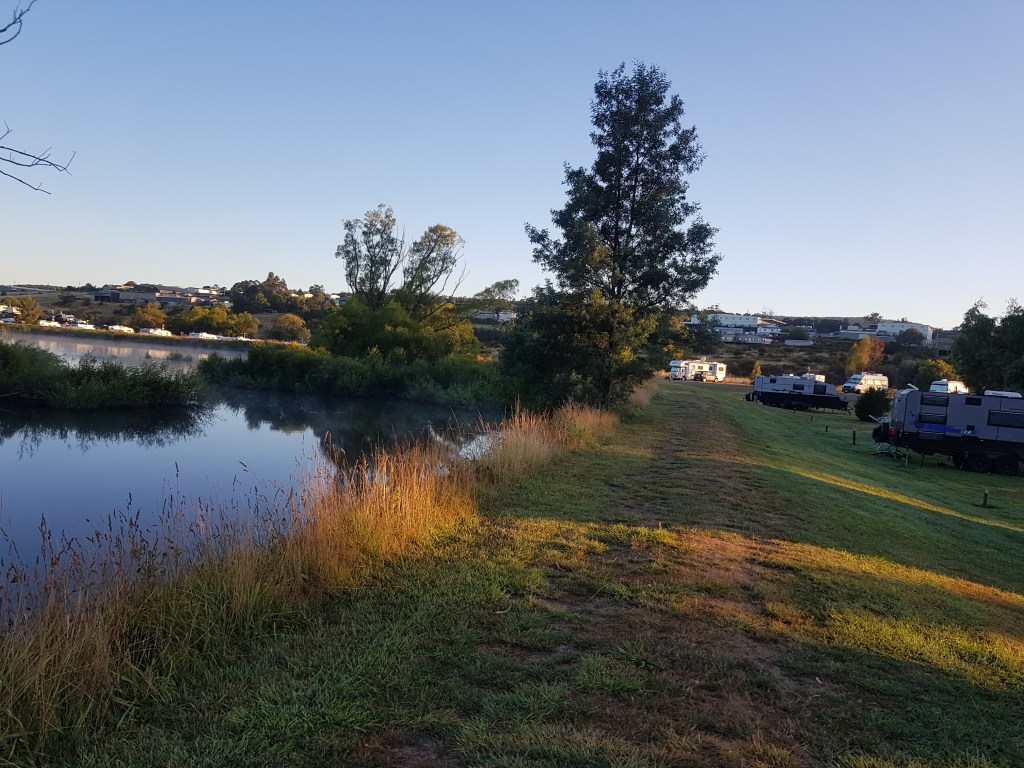
The pictures below are from our campsite at Old Mac’s Farm on the southern edge of the city. We got up at sunrise…
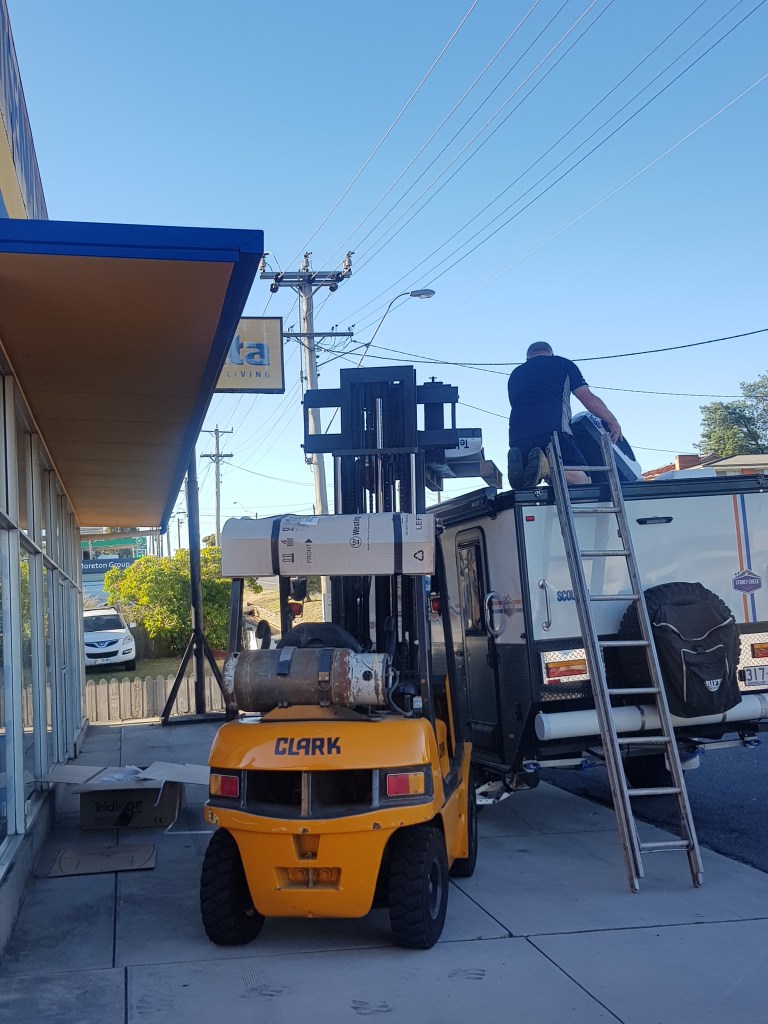
… and made it in time to the electronic appliances shop that would handle the replacement of the air conditioner – on the sidewalk in front of the building along a busy road! (Other caravans had to line up on the curb waiting for their turn.)
The electrician was finished in record time: It took him less than an hour, every move practised a thousand times. But the weather was too cold to test the cooling function of the unit. We had to wait for a hot day… and when would that happen?! At this time we didn’t know that in ten days a 35-degree heatwave (one day) would be waiting for us at the Central Highlands and the AC would save the day.

















 Liz Mike Travels